

 changeadmin
- Documentary Name: Kingdom
- Direction and Production: BBC Natural History Unit
- Run Time: 45 to 50 minutes (6 episodes)
- Year of Release: 2025
- Our Rating:
 (4 stars)
BBC’s Kingdom documentary is one of the most ambitious wildlife films in recent years, following four rival predator families in Zambia’s South Luangwa National Park over five years.
Rather than treating the animal kingdom as a collection of isolated species, it reveals a living political drama in which lions, leopards, hyenas and African wild dogs compete for territory, food and mates.
It is divided into six parts and narrated by legendary David Attenborough; the series takes us through the lives of wild families living in Nsefu, a fertile stretch beside the Luangwa River.
The BBC Natural History Unit spent about 5 years on 76 shoots in Nsefu, following wild animal families in their natural habitat, including how their lives criss-cross each other’s paths.
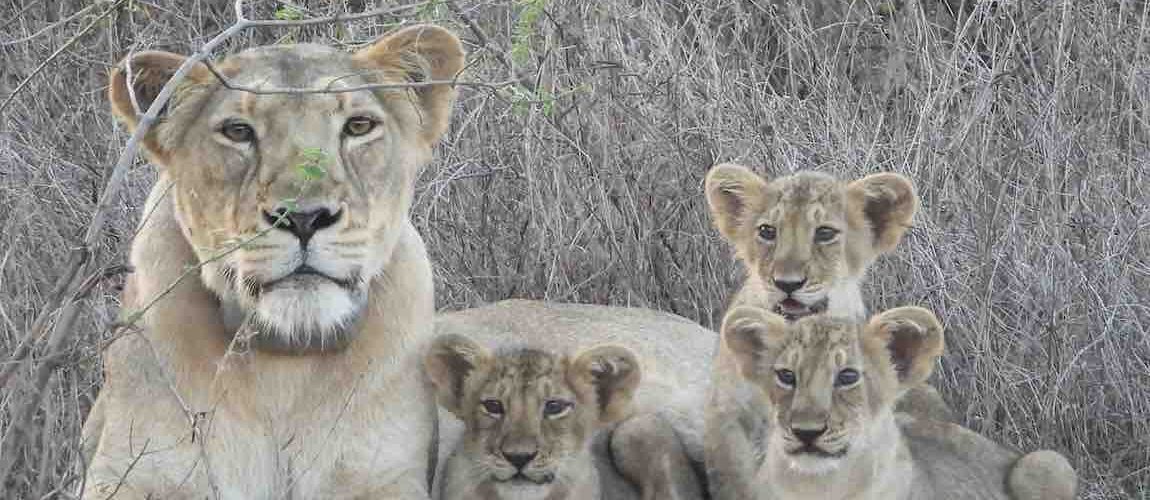
This long-term approach turns Olimba the leopard, Storm’s wild-dog pack, Rita’s lion pride and Tenta’s hyena clan into characters whose victories and losses genuinely matter.
David Attenborough’s controlled narration gives the series its moral and emotional centre, but the real strength is restraint.
Kingdom doesn’t soften nature into a fairy tale; it shows its rawness. It shows starvation, infanticide, territorial violence, floods and the vulnerability of animals and their cubs.
Yet it also finds tenderness: hyena mothers nursing cubs for unusually long periods, leopard cubs practising hunting skills on an exasperated hippo, and wild dogs caring for an injured packmate.
Unknown facets of animal life

The Kingdom documentary’s real strength and valuable contribution is that it shows wildlife behaviour usually hidden from human eyes and rarely displayed in other wildlife films.
Among its rare revelations was an instance when wild dogs attempted to rescue their amputated packmate from a crocodile attack. An extraordinary example of pack loyalty and coordinated risk-taking.
Hyenas emerge as far more complex than the scavenging caricature. Behind the high-pitched cackling laughs and resonant whoops, hyenas display social and cognitive behaviours.
The series captures intimate life inside a matriarchal clan, where succession, kinship and communal den life shape survival as much as hunting skill does.
One episode shows a pregnant hyena stealing food from wild dogs, then hiding a carcass underwater to conceal its scent from rivals.
The series follows a leopard, Olimba, whose story reveals the precariousness of solitary motherhood: she must raise cubs while avoiding lions, hyenas, and wild dogs, all of which have the advantage of numbers.
One remarkable moment shows a six-month-old leopard cub helping its mother drive a hyena away from a kill, evidence that even supposedly independent cats learn through cooperation and apprenticeship.
Wild dogs are perhaps the emotional heart of the series. They are among Africa’s most endangered carnivores, yet Kingdom presents them as extraordinarily cooperative: sharing food, collectively rearing pups and accepting an injured dog back into the pack after he loses a leg to a snare.
Series Ends With How Conservation Works
The sixth episode shifts the lens from animals to humans, revealing the conservation machinery behind the story.
It introduces the rangers, scientists, anti-poaching units and local Zambian crew members whose work made both the filming and the animals’ survival possible.
This is where the Kingdom documentary becomes more than a beautiful wildlife series, including snippets of how sniffer dogs help in wildlife conservation.
It shows anti-poaching teams using dogs to track wildlife crime, removing deadly wire snares, protecting dens and supporting law-enforcement action against illegal ivory and bushmeat trade.
It also shows practical human-wildlife conflict mitigation, including rapid-response teams using chilli-based deterrents to keep elephants away from farms.
The Kingdom documentary makes an important point: conservation is not merely about fencing off wilderness.
It is a daily, local, labour-intensive practice, patrolling, monitoring, de-snaring, gathering evidence and building trust with communities.
The Zambia Carnivore Programme worked alongside filmmakers, using footage to improve understanding of carnivore movement, diet, births, deaths and habitat use.
Wrapping Up
BBC documentary Kingdom is sometimes difficult to watch through its honesty, yet it’s powerful in its narrative and wildlife storytelling.
Scenes of a leopard mother first losing her cub and later fighting its adult daughter for territory, a hyena cub losing its mother, and an amputated wild dog falling prey to a crocodile attack are heartbreaking.
But there are also moments of hope: a group of lionesses finding their pride; wild dogs’ pack uniting with another group by crossing the river, and Olimba becoming mother again.
By ending with conservationists in action, it argues that human pressure created many of these crises and human commitment can still alter their outcome.
As an environmental and wildlife film, Kingdom deserves high praise for its cinematography, narrative patience and scientific grounding.
With close-up shots of animals’ expressive eyes, an honest portrait of animal families, night-vision visuals, and shots of the unseen people working behind the scenes, the documentary is worth watching.



Add comment