


 changeadmin
The Delhi government has announced a new Electric Vehicle (EV) policy, one of India’s most ambitious city-level transport transition plans, designed to cut air pollution, reduce oil dependence, and push faster EV adoption through a mix of incentives and mandates.
The latest policy framework, approved for 2026 and set to run until March 31, 2030, combines consumer subsidies with a phased shift away from internal-combustion vehicles in key vehicle segments.
At its core, the Delhi EV Policy 2.0 is meant to speed up the transition to electric mobility in Delhi by making EVs cheaper to buy and more attractive to own.
The policy offers strong support for private buyers, commercial fleets, and public transport operators, while also tightening rules for petrol and diesel vehicles over time.
The government’s broader goal is to improve urban air quality and build a cleaner mobility ecosystem in the capital.
Budget
The Delhi EV Policy has allocated ₹15,000 crore in investment, of which ₹7,000 crore will be earmarked to boost EVs in the city over the next four years.
The remaining ₹8,000 crore will be allocated to EV infrastructure and tax exemptions over the same period.
Incentives for buyers
The policy includes purchase support for electric two-wheelers, three-wheelers, and cars, along with benefits linked to vehicle scrappage.
Buyers can also get major relief on road tax and registration fees, with EVs priced up to Rs 30 lakh eligible for 100% exemption in many cases until March 31, 2030.
Buyers of electric two-wheelers can avail the benefits of up to Rs 30,000, while electric three-wheelers will be eligible for incentives of up to Rs 50,000. Those purchasing electric N1 goods carriers can receive financial support of up to Rs 1 lakh.
The new policy introduced scrappage incentives for replacing older vehicles with electric models.
Owners scrapping old 2Ws will receive ₹10,000, while owners scrapping old 3Ws will receive ₹25,000 each. Owners scrapping Bharat Stage-IV or older four-wheelers will receive ₹1 lakh.
Rules by vehicle type
The most notable part of the policy is the phased restriction on new fossil-fuel vehicle registrations.
Under the draft and cabinet-approved framework, all new three-wheeler registrations are expected to be electric from January 1, 2027, and only electric two-wheelers can be registered from April 1, 2028.
The policy also laid down mandatory electrification targets for the school transport fleet.
Schools will have to ensure that at least 10 per cent of owned or hired buses are electric within two years of the policy coming into force, with the share rising to 30 per cent by the third year.
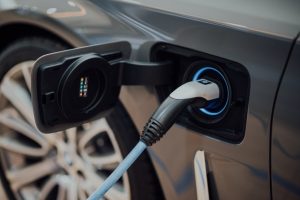
EV Charging Infrastructure
The policy also includes a provision to install 32,000 EV charging points across Delhi, a crucial step toward accelerating electric vehicle adoption.
The expansion will be supported through the Indian government’s PM E Drive scheme, which provides financial support for EV charging infrastructure, along with any remaining assistance allocations under the Delhi EV Policy budget.
Why it matters for Delhi
Delhi has long faced severe air pollution, and transport is one of the largest contributors.
By targeting high-volume vehicle categories such as two-wheelers and three-wheelers, the policy aims to deliver faster emissions cuts than a gradual, purely voluntary approach would.
It also signals to automakers, charging companies, and fleet operators that Delhi is moving toward a much stricter EV-first market.
Challenges ahead
The policy is ambitious, but its success will depend on execution. Delhi will need enough charging infrastructure, reliable enforcement, and public confidence in EV range, maintenance, and resale value.
There is also industry concern about how quickly mandates will reshape the market, especially for manufacturers still dependent on fossil-fuel-powered two- and three-wheelers.
Wrapping Up
Overall, Delhi’s electric vehicle policy is not just an incentive scheme; it is a market-shaping intervention. If implemented well, it could become a template for other Indian cities trying to balance clean air goals with practical transport transition.
Watch this video to know the context and details of Delhi’s EV policy.







Add comment