

 changeadmin
India’s Minister for Environment, Forest and Climate Change, Mr Bhupender Yadav, chaired the 27th meeting of the G.B. Pant Society of Himalayan Environment and Development in New Delhi today.
During the meeting, Yadav emphasised the importance of access and benefit-sharing rights and People’s Biodiversity Registers (PBRs) in improving the livelihoods of native villagers in the Himalayan ecosystem and contributing to its larger welfare.
Mr Yadav highlighted that the government has focused on developing a policy framework that balances ecological security with sustainable socio-economic growth in the Indian Himalayan Region.
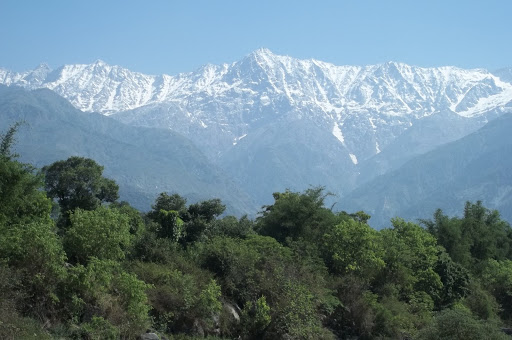
The Indian Himalayan Region is a vital ecological, climatic, and strategic lifeline that supplies roughly 80% of India’s water needs, acts as a primary geographical defence barrier, and supports over 40 million residents, along with hundreds of millions living downstream.
However, rapid global warming is accelerating glacial retreat, leading to erratic water flows, glacial lake outburst floods (GLOFs), and long-term water security risks.
Furthermore, the region is facing many challenges from unregulated urbanisation, infrastructure development, unsustainable tourism, and waste generation.
Heavy construction of highways, tunnels, and buildings causes widespread deforestation, slope destabilisation, soil erosion, and frequent landslides.
Massive tourist influxes generate unmanaged plastic pollution, strain local water tables, and degrade fragile high-altitude ecosystems.
These issues are driving biodiversity loss and habitat fragmentation, threatening native fauna and flora.
Therefore, it is important to take steps to protect the fragile Himalayan ecosystem, which requires coordinated action across governance, tourism, waste management, and climate resilience.
During the meeting, the institute released four publications, adding to its knowledge repository.
The publications cover biodiversity conservation practices in the Bhagirathi Eco-sensitive Zone, the Gangotri Glaciated System, e-PBR governance and Ramsar wetlands in the Indian Himalayan Region.
The four publications released are:
1. Biodiversity and its Conservation Practices for Bhagirathi Eco-sensitive Zone
2. Gangotri Glaciated System
3. E-PBR Governance for the Indian Himalayan Region
4. Ramsar Wetlands of the Indian Himalayan Region







Add comment