

 changeadmin
The 7th edition of the AgriVoltaics World Conference (AWC) 2026 commenced today at Bharat Mandapam, New Delhi, marking a milestone in India’s efforts to integrate agriculture and renewable energy.
This premier global summit is being hosted in the Global South for the first time in India, firmly reinforcing India’s expanding stewardship in concurrently advancing global food security, energy self-reliance, and sustainable development.
The Ministry of New and Renewable Energy (MNRE) is hosting the prestigious three-day AgriVoltaics World Conference, with support from Germany’s Federal Ministry for the Environment, Climate Action, Nature Conservation and Nuclear Safety (BMUV), and in partnership with Conexio-PSE under the theme “Powering the Global South.”
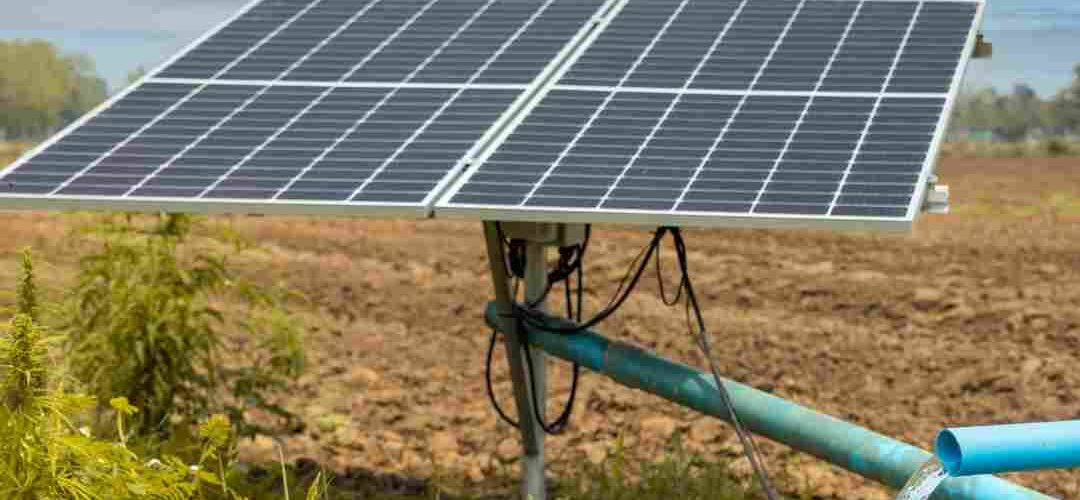
Agrivoltaics is the practice of using the same piece of land for both solar energy production and agricultural activities, such as growing crops, grazing livestock, or supporting pollinator habitats.
The formal launch of the AgriVoltaics World Conference featured three knowledge resources: the Decision-Making Tool developed by the India Agrivoltaics Alliance (IAA), the Book of Abstracts developed by the International Water Management Institute (IWMI), and the AgriPV Policy Handbook from MNRE.
The conference brought together over 1200 delegates, including 150+ foreign participants, comprising international experts, policymakers, researchers, industry leaders, innovators, start-ups, and development partners.
The event provides a platform for knowledge exchange, technology collaboration and South-South cooperation. The participation demonstrates a highly integrated governance strategy to align energy self-reliance with agricultural security.
The event featured Comprehensive Ecosystem Integration across Science, Policy, and Innovation. Under this, the programme includes a dedicated India Focus Track alongside two parallel scientific tracks.
Discussions across the conference will address innovation, state leadership, crop productivity, policy frameworks, financing models, technology deployment, climate resilience and farmer-centric business models.
Furthermore, a dedicated startup and innovation platform – featuring an interactive AgriVoltaics Pitch Hub – is actively showcasing next-generation technological solutions, bridging the gap among clean-tech innovators, start-ups, venture capitalists, and global industry leaders.
Agrivoltaics offers a transformative opportunity to mitigate rural underemployment, foster local entrepreneurship, increase farmers’ incomes, protect crop microclimates, and secure sustainable livelihoods against the escalating vagaries of climate change through the dual use of land for food and clean energy.
Delegates at the conference highlighted agrivoltaics’ role in building climate-resilient agriculture and creating sustainable livelihoods in rural India.
The proceedings collectively underscored that the future of agriculture lies at the intersection of clean energy and digital technology.
Agrivoltaics represents a monumental transition in India from conventional agriculture to techno-agriculture, combining solar energy with precision farming, smart irrigation, digital technologies, and innovative business models.
The 7th AgriVoltaics World Conference is expected to decisively accelerate international collaboration, cementing India’s role at the vanguard of engineering a resilient, sustainable future for global food and energy systems.
On the occasion, India’s Minister of Agriculture, Shivraj Singh Chouhan, addressed the gathering at the AgriVoltaics World Conference and highlighted that integrating agriculture and solar power could promote global welfare and enhance farmers’ economic prosperity.
Mr Chouhan stressed that agrivoltaics policies must meet the practical needs of India’s small and marginal farmers, who make up more than 85 per cent of the farming community.
Mr Chouhan explained that agrivoltaics enables solar power generation through panels installed above agricultural land while allowing crops to grow.
He noted that electricity had become indispensable to modern life and agriculture, making the integration of energy generation with farming an important step towards farmers’ welfare.
The Agriculture Minister highlighted the structural challenges facing the agriculture sector, noting that the average landholding in the country was only 0.96 hectares. He emphasised that agrivoltaics models must allow farmers to continue cultivation rather than replace farming with solar power generation.
He called for practical system designs that account for panel height, spacing between support structures, and the movement of agricultural machinery, enabling farmers to plough and change crops and cropping patterns as needed.
India’s Minister for New and Renewable Energy, Pralhad Joshi, highlighted India’s progress in expanding clean energy capacity alongside economic growth while delivering the address.
Pralhad Joshi stated that India’s non-fossil fuel-based installed electricity capacity had reached 308.03 GW, accounting for more than 55 per cent of the country’s total installed electricity capacity of approximately 560 GW.
Emphasising the importance of balancing food security, energy requirements and land availability, the Minister described agrivoltaics as an approach that could enable farmers to earn from both cultivation and electricity generation on the same land. He reiterated the principle of “One land, two harvests”.
He cited a study by The Energy and Resources Institute (TERI) estimating that 47.5 million hectares, or about 30 per cent of India’s 160 million hectares of cropland, were technically suitable for agrivoltaics.
One deployment scenario covering 16 million hectares estimated annual electricity generation of 12,775 TWh, potentially comparable to or exceeding India’s projected electricity demand of 5,250–10,020 TWh by 2050.
The Minister noted that these were technical estimates and that actual deployment would depend on local conditions and feasibility. Maharashtra, Rajasthan, Andhra Pradesh, Madhya Pradesh, Karnataka and Uttar Pradesh together accounted for nearly 50 per cent of India’s estimated agrivoltaic potential.
Mr Joshi highlighted that agrivoltaics could be adapted to different agricultural activities, including fruit and plantation crops, vegetables, spices, horticulture, floriculture, fodder, and livestock rearing in suitable settings.
He noted that field studies had indicated potential yield improvements of 10–20 per cent for certain crops and reductions of around 30 per cent in water consumption under suitable systems.
Mr Joshi observed that the average cost of electricity supply had been around ₹7 per unit in 2025–26, while some agrivoltaic assessments indicated potential generation costs of ₹3.20–₹3.30 per unit under specific assumptions.
He highlighted that competitive project designs and financing models could help make agrivoltaics commercially viable.
Referring to international experience, the Minister noted that the global agrivoltaics market had surpassed 18.4 GW of installed capacity in 2025.
He highlighted Italy’s €1.7 billion funding programme for farmers, solar developers and research institutions; Japan’s opening of all categories of farmland to agrivoltaics and support for small-scale systems through preferential tariffs; and Germany’s linkage of support to continued agricultural use and minimum crop-yield requirements.
He also highlighted the sector’s employment potential. According to the AgriPV Manual of the Centre for Study of Science, Technology and Policy, agrivoltaics could generate between 1.10 lakh and 3.32 lakh full-time-equivalent jobs, contributing to agricultural productivity, skills development, entrepreneurship and rural employment.
The Minister emphasised the importance of international partnerships in developing agrivoltaic solutions suited to the needs of the Global South. He acknowledged the contributions of German partners, the Indo-German Cooperation on Agrivoltaics, the International Solar Alliance and other institutions working to advance the sector.
He noted that countries across Africa, Asia and Latin America faced common challenges relating to smallholder farmers, water stress, reliable clean energy and affordable technologies, and called for cooperation based on mutual learning and locally adapted solutions.
Mr Joshi highlighted the launch of the Global Agrivoltaics Climate-Zone Technical Framework as an important step towards wider adoption of the technology.
The framework is intended to help governments, farmers, developers, researchers, and financiers make informed decisions, establish technical standards, and move from isolated pilot projects to broader implementation.
Addressing the AgriVoltaics World Conference, Santosh Kumar Sarangi, Secretary at India’s Ministry of New and Renewable Energy, highlighted PM-KUSUM‘s contribution to promoting solar energy in agriculture.
He said the programme had solarised about 25 lakh pump sets, benefiting around 25 lakh farmers by enabling them to replace diesel-powered pumps with solar-powered alternatives.
He also highlighted the programme’s contribution to reducing diesel consumption and foreign exchange expenditure on crude oil imports.
Mr Sarangi noted that the Ministry was working with the Ministry of Agriculture and Farmers Welfare to develop the next phase of PM-KUSUM with a broader focus on farmers’ progress, income generation and improved livelihoods.
He emphasised the importance of partnerships with international and national institutions and highlighted ongoing efforts to develop appropriate electricity procurement models involving power distribution companies and state energy departments to support agrivoltaics at scale.
The three-day AgriVoltaics World Conference will conclude on 23rd October, 2026.






Add comment