

 changeadmin
India has taken a significant regulatory step toward widening the use of high-ethanol transport fuels.
The Ministry of Road Transport and Highways (MoRTH) has amended the Central Motor Vehicles Rules, 1989, to expressly recognise E100 alongside E85 in the emission-certification framework for flex-fuel vehicles.
The change is designed to make it easier for manufacturers to certify vehicles that can run on very high ethanol blends, while retaining strict emissions and safety requirements.
Ethanol blending has become a central pillar of India’s effort to reduce dependence on imported crude oil, support farmers and distilleries, and lower the carbon intensity of road transport.
The country has already moved through progressively higher ethanol blends in petrol, with E10 and E20 now familiar reference points for motorists.
But E85—85% ethanol mixed with petrol—and E100, essentially neat ethanol, require vehicles engineered differently from conventional petrol cars.
Flex-fuel vehicles are built to operate on a wide range of ethanol-petrol combinations, including very high ethanol blends. Until now, the regulatory language around certification has primarily referred to E85.
By explicitly adding E100, the government has removed an ambiguity that could have constrained the development and approval of vehicles designed to run on near-pure ethanol.
The amendment updates the emission-certification provisions of the Central Motor Vehicles Rules to include E100 and E85.
Vehicles certified for these fuels will still have to meet the emissions and safety standards applicable to their vehicle category.
In other words, this is not a relaxation of environmental oversight; it expands the technical pathway for formally approving high-ethanol vehicles.
The notification also clarifies an important consumer-safety point: E85 and E100 are meant only for vehicles specifically designed and certified to use them.
They are not intended for the ordinary vehicles currently on Indian roads. A car’s compatibility with E10 or E20 does not mean it can safely use E85.
Equally important, the government has stated that existing vehicle owners are not required to switch fuels or modify their vehicles now or in the future.
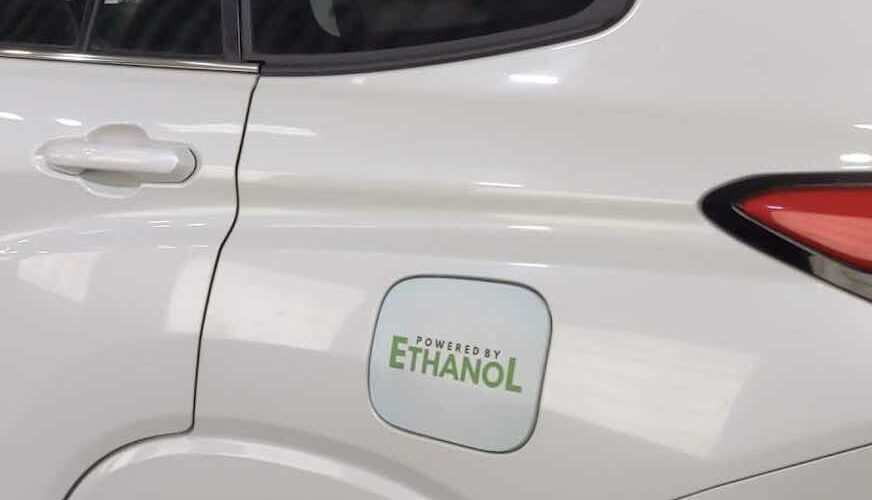
Motorists should instead check the fuel-compatibility sticker on their vehicle and follow the manufacturer’s guidance in the owner’s manual before choosing a fuel at the pump.
The notification also updates provisions relating to biodiesel and makes certain technical corrections. The revised rules take effect from their publication in the Official Gazette.







Add comment