

 changeadmin
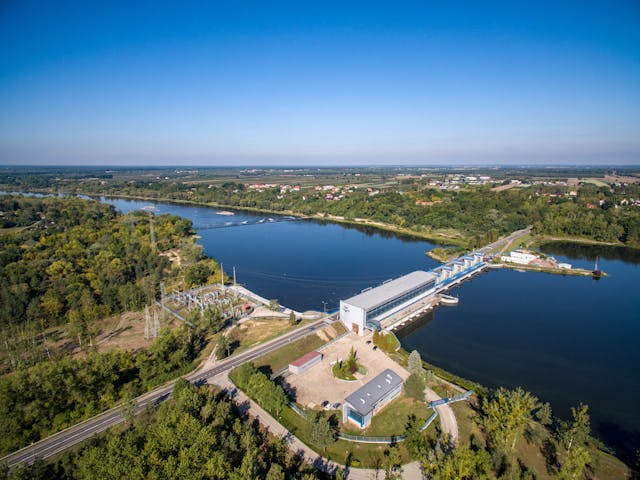
Minister of State for New and Renewable Energy and Power Shripad Yesso Naik highlighted that Small Hydro Power plays a distinctive role in India’s clean energy transition.
Minister was addressing the Curtain Raiser Programme for the dedicated Small Hydro Power (SHP) session at the Bharat Renewable Energy Summit & Expo 2026 held today in New Delhi.
Speaking on the occasion, Minister Naik said that Small Hydro Power can contribute to energy security, decentralised generation, employment and socio-economic development in remote areas.
Mr Naik said that under the visionary leadership of Prime Minister Narendra Modi, India’s clean energy journey has undergone a remarkable transformation, propelling the country to the forefront of the global energy transition.
He said renewable energy has emerged as a powerful instrument of energy security, economic growth, technological progress and employment generation.
The Minister highlighted that India has crossed the milestone of 300 GW of installed non-fossil-fuel capacity. He said the strength of India’s energy transition lies in building a diverse, balanced and resilient energy portfolio suited to the country’s geography, resources and development needs.
Mr Naik emphasised the significant potential of Small Hydro Power in this context. He said India’s presently assessed Small Hydro Power potential is around 21 GW across more than 7,100 identified sites, of which only about 5.2 GW has been harnessed.
He noted that this represents a significant opportunity to further develop the sector. Mr Naik said the significance of Small Hydro Power goes beyond adding generating capacity.
He noted that, wherever technically and environmentally feasible, appropriately designed run-of-river projects can provide a renewable energy option that requires relatively less land and avoids the large-scale submergence and displacement associated with major reservoir-based projects.
He said Small Hydro Power can provide dependable renewable electricity closer to the point of consumption, strengthen decentralised generation and contribute to the resilience of the power system, particularly in geographically challenging regions.
The sector can also create employment, support local enterprises, and generate economic opportunities in remote areas while remaining sensitive to ecology and local communities.
The Minister highlighted the Government’s proposed Small Hydro Power Development Scheme for the period 2026-27 to 2030-31, with an outlay of ₹2,584.60 crore and a target of approximately 1,500 MW of new Small Hydro Power capacity.
The Scheme will also incentivise States to prepare Detailed Project Reports for about 200 projects, thereby creating a pipeline of Small Hydro Power projects for future development.
The Minister stressed that Government support alone cannot unlock the sector’s full potential and called for a strong partnership among the Central Government, State Governments, developers, financial institutions, technology providers and investors.
He emphasised the need for policy certainty, streamlined approvals, improved ease of doing business, stronger Centre-State coordination, and better project bankability.
Mr Naik said that the Curtain Raiser Programme marks the beginning of an important national conversation on how India can make fuller and smarter use of the potential of Small Hydro Power.
He said the dedicated Small Hydro Power session at the Bharat Renewable Energy Summit & Expo 2026, to be held from 2nd to 5th November 2026 at Bharat Mandapam, New Delhi, will provide an important platform to deliberate on policy reforms, investment, financing, technology and partnerships.
The Minister invited all stakeholders to participate in this national endeavour and work together to harness India’s river systems, geographical diversity, indigenous technological capabilities and modern innovation to build a cleaner, stronger, more self-reliant and sustainable India.
Mr Santosh Kumar Sarangi, Secretary, Ministry of New and Renewable Energy (MNRE), extended a warm invitation to participate in large numbers in the forthcoming Bharat Renewable Energy Summit and Expo 2026.
The Secretary highlighted the long lead time for starting hydropower projects as a key challenge, noting that delays in obtaining forest, environment, and right-of-way clearances adversely affect timely project execution.
He said that while the Ministry of New and Renewable Energy (MNRE) has been assured by the Ministry of Environment, Forest and Climate Change (MoEFCC) of timely clearances, particularly for small hydropower projects, a mechanism should be developed to generate and escalate alerts in cases of undue delays.
Emphasising the need to improve the bankability of small hydropower projects, the Secretary said that their unique cash-flow profile necessitates access to long-term patient capital.
He urged the Indian Renewable Energy Development Agency (IREDA) to lead efforts with banks and multilateral development institutions, including the Asian Development Bank (ADB) and the World Bank, to increase the availability of patient capital for project developers.
He urged the stakeholders to share their ideas and experiences and suggest what else could be done to promote hydropower, particularly small hydropower, in the country.
Several stakeholders, along with senior officials and delegates from research and industry sectors, attended the Curtain Raiser.


Add comment