

 changeadmin
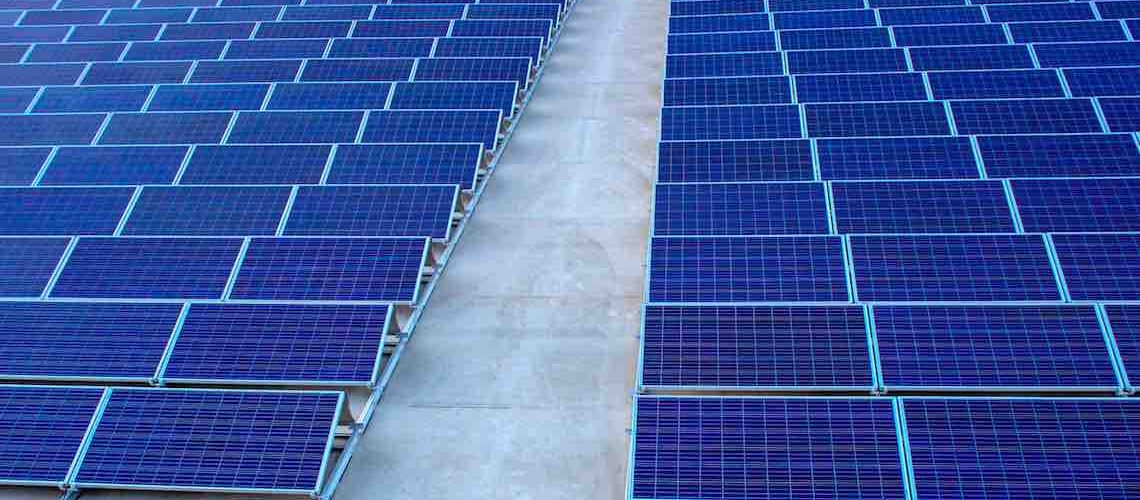
According to a report on the Floating Solar PV Potential Assessment of India, the country’s floating solar potential is estimated at over 102 GWp.
The report was prepared by the National Institute of Solar Energy (NISE), a research and development organisation under the Ministry of New and Renewable Energy that focuses on solar energy.
The NISE assessment report evaluated India’s floating solar potential, utilising an advanced, data-driven approach and presenting an enormous untapped capacity.
This assessment focuses on the potential of water bodies across all Indian states, incorporating key hydrological and topographical parameters to ensure an accurate evaluation of floating solar photovoltaic (FSPV) installations.
During the assessment, NISE mapped 11,197 waterbodies across India and identified 682 as technically feasible for floating solar projects, covering nearly 1,946 sq km of reservoir area.
The assessment considered waterbodies with depths of 3-30 metres located within 10 km of road networks and transmission substations.
Further, as per standards, limiting floating solar to a maximum of 20% of a waterbody’s total surface area to minimise ecological impacts, prevent oxygen depletion, and preserve competing uses such as fisheries and recreation.
The study has excluded water bodies with an area of less than 10 hectares, as they are deemed unsuitable for large-scale floating solar installations.
The top five states with the highest floating solar potential are Maharashtra (16.3 GWp), Andhra Pradesh (14.9 GWp), Karnataka (13.7 GWp), Odisha (12.8 GWp), and Telangana (10.7 GWp).
These states have numerous water bodies suitable for floating solar deployment. Omkareshwar Floating Solar Park in Madhya Pradesh is currently India’s largest floating solar project, with a capacity of 600 MW.
| State | WaterBody Area (km²) | Feasible Area (km²) | Feasible Potential (GW) |
Max 20% |
Max 20% area utilisation – Potential (GW) |
|---|---|---|---|---|---|
| Maharashtra | 1618.55 | 775.17 | 40.70 | 310.08 | 16.28 |
| Madhya Pradesh | 1433.88 | 764.30 | 40.13 | 283.68 | 14.89 |
| Karnataka | 1491.98 | 632.72 | 33.22 | 260.72 | 13.69 |
| Odisha | 1221.16 | 590.57 | 31.00 | 244.05 | 12.81 |
| Telangana | 1523.36 | 333.95 | 17.53 | 204.15 | 10.72 |
| Gujarat | 619.74 | 246.39 | 12.94 | 120.34 | 6.32 |
| Uttar Pradesh | 552.88 | 198.50 | 10.42 | 107.40 | 5.64 |
| Total | 10725.99 | 4546.01 | 238.66 | 1946.24 | 102.18 |
This assessment raises India’s total estimated solar potential to 3,445 GWp, adding significantly to the previously mapped land-based solar potential of 3,343 GWp.
The Ministry of New and Renewable Energy is working on a dedicated scheme to promote the deployment of floating solar across the country.
In the last 12 years, India’s non-fossil fuel capacity has increased from 81 GW in 2014 to 288 GW, and solar capacity has risen from 2.8 GW to more than 155 GW.
Wrapping Up
India’s floating solar potential represents a transformative solution for the country’s renewable energy future, utilising waterbodies for clean energy generation without requiring additional land.
Furthermore, floating solar offers 11-15% higher efficiency due to water cooling, reduces reservoir evaporation by 70%, improves water quality by limiting algae growth, extends panel lifespan, and enables hybrid hydropower-solar systems.






Add comment