

 changeadmin
“Animals Should Be Free”—But What about the Reality?
Zoos make people uncomfortable. Not always loudly, but in quieter ways – a passing comment, a lingering pause, a feeling that something is not quite right.
We grow up believing that wild animals belong in forests, rivers, and open landscapes. So, when we see them inside enclosures, it naturally raises a question: Why is this animal here?
For many, the answer feels obvious. Wild animals should be free. Anything else feels wrong.
But the reality is not that simple.
Because today, Indian zoos are no longer just places where animals are kept behind barriers. They sit at the intersection of conservation, urbanisation, and a growing distance between people and nature.
And that is where the real conversation begins.
Why this conversation matters more in India
India is one of the most biodiverse countries in the world. At the same time, it is also one of the most densely populated.
Forests are under pressure. Landscapes are fragmented. Encounters between humans and wildlife are increasing. And for a large part of the population, especially in cities, direct interaction with nature is becoming rare.
In this reality, zoos occupy a strange but important space. They are not wild. But they are often the closest connection people have to it. And that is exactly why the way we think about zoos matters.
The discomfort is real, and it has a history
To understand why zoos are often seen negatively, we have to look at where they came from.
Many zoos in India and across the world were built at a time when the main purpose was to display animals. The focus was on visibility and variety, not on behaviour or well-being. Enclosures were smaller, more artificial, and often lacked the complexity animals need.
Even today, some of these spaces still exist. When visitors see an animal pacing, sitting still for long periods, or appearing disconnected from its surroundings, it reinforces a very natural thought: “This does not look right.”
And in some cases, that observation is valid. Zoos are still dealing with the legacy of older design and limited resources. And that is why the idea of zoos as “animal prisons” continues to stay in public memory.
But stopping the conversation there misses what is changing and what needs to change further.
A quiet shift: from keeping animals to caring for them
Over time, the way zoos think about animals has been quietly changing.
Earlier, the focus was largely on containment—how do we safely house this animal?
Today, the question is shifting toward something more meaningful—what kind of life can this animal lead here?
This change may not always be obvious to visitors, but it is fundamental. Zoos are increasingly drawing from animal behaviour and welfare science to guide their decisions.
A key part of this approach is enrichment—simply put, creating environments and routines that encourage animals to behave as they would in the wild.
Instead of just being present in an enclosure, the aim is for the animal to engage with its surroundings, to explore, forage, rest, climb, or interact in ways that reflect its instincts.
It is a shift from just keeping animals alive to thinking more carefully about how they experience life under human care. That means:
- Food is sometimes hidden or presented in ways that encourage searching
- Enclosures include different levels, textures, and spaces
- Animals are given opportunities to climb, dig, swim, or explore
- Environments are changed or rotated to reduce monotony
These changes are not about making enclosures look better. They are about making life inside them more meaningful for the animal.
In several Indian zoos today, including recently upgraded facilities, these changes are already visible on the ground.
Many zoos in India have started adopting these practices. Some have redesigned enclosures to include vegetation, natural barriers, and off-display areas where animals can move away from constant human presence.
Building on this shift, some Indian zoos are also exploring safari-style experiences, where the idea is to reduce barriers as much as possible and allow animals to move within larger, landscape-driven spaces.
Instead of visitors walking past enclosures, they travel through these habitats in controlled vehicles, observing animals in settings that feel closer to their natural environment.
Well-designed safaris rely on natural moats, terrain, and distance rather than cages, which not only improves animal comfort but also changes how people experience wildlife, less as a display and more as a glimpse into a living ecosystem.
But it is important to be honest – this progress is uneven. Some zoos are moving forward quickly. Others are still working through basic constraints.
We must understand that what we are seeing today is not a finished system, but one that is still evolving.
A common misunderstanding: where zoo animals come from
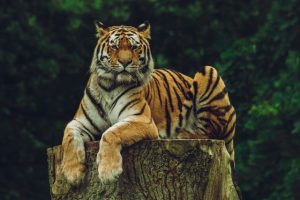
One of the biggest assumptions people make is that animals are taken from the wild and placed in zoos for display.
In India, that is not how the system works. Wild capture for display is not legally permitted.
Most animals you see in Indian zoos today are either born under human care, sometimes across generations, or brought in through rescue and confiscation.
Rescue cases are far more common than people realise. Animals arrive after being injured in the wild, caught in human-wildlife conflicts, or seized from the illegal wildlife trade.
In many of these situations, releasing the animal back is not possible. It may not survive, or it may create further risks. For these animals, the zoo becomes a place of long-term care.
In many cases, these animals are not even part of the public display. They are housed in off-exhibit rescue centres, where they are treated, stabilised, and, where possible, prepared for rehabilitation.
Only when release is not feasible are they considered for long-term housing within the zoo.
This shifts how we should look at these animals. They are not just there to be displayed. They are, in many ways, ambassadors of their species in the wild.
A leopard in a zoo is not just an individual animal. It represents a larger story of shrinking habitats and increasing encounters with humans.
A vulture in captivity reflects a species that declined sharply due to human intervention.
But unless these stories are shared, visitors see only the surface.
Why releasing animals is not as simple as it sounds
The idea of releasing animals into the wild feels like the right thing to do. But in reality, it is rarely that straightforward.
Animals born in captivity often lack the skills needed to survive in the wild. They may not know how to hunt, avoid threats, or compete for territory. Even rescued animals may not be fit for release due to injury, stress, or dependency on humans.
There is also the question of habitat. In many cases, the original environment may no longer be safe or even exist in the same form.
Reintroduction is a specialised process. It requires preparation, monitoring, and the right ecological conditions. And even then, success is not guaranteed.
So, for many animals, remaining under managed care is not about taking away freedom, it is about ensuring survival—sometimes the only viable option left.
The role zoos play beyond what we see
From a visitor’s perspective, a zoo is about what is visible – animals, enclosures, pathways. But a lot of the work happens behind the scenes.
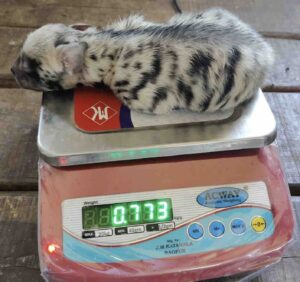
Zoos in India regularly care for animals that cannot return to the wild. Some are part of conservation breeding programmes. Others are simply being provided a stable and safe environment after difficult circumstances.
These systems are guided by institutions like the Central Zoo Authority, which sets standards for animal housing, transfers, and overall management.
Not every zoo operates at the same level, but there is a framework, and it is gradually shaping improvements.
The biggest gap: what visitors take back
If there is one area where Indian zoos are still not reaching their full potential, it is in their ability to connect with people. Millions of visitors walk through zoos every year. But what do most of them leave with?
They see animals. They take photos. And then they move on.
The deeper connection is often missing.
A zoo has the potential to do much more. It can help people understand:
- Where an animal comes from
- What challenges does it face in the wild
- How human actions are affecting it
- Why conservation matters
But for that to happen, the experience needs to be designed differently. Without that layer of understanding, a zoo visit remains just an outing, not an insight.
So, are zoos animal prisons?
Sometimes, they can feel that way, especially where design and management fall short. And when that happens, the criticism is justified. But reducing all zoos to that idea oversimplifies a much more complex reality.
A zoo can be many things. It can be outdated and insensitive. Or it can be a place of care, recovery, and learning. The difference lies in how it is planned, managed, and experienced.
A better way to think about zoos
Instead of asking: “Should zoos exist?”
It may be more useful to ask: “What kind of zoos do we want?”
Zoos that focus only on display will continue to feel uncomfortable and outdated.
But zoos that prioritise animal welfare, meaningful design, and public understanding can still play an important role. India has both the need and the opportunity to make this shift.
Zoos will always carry a certain ethical tension. That is unavoidable. But dismissing them entirely as “animal prisons” does not help move the conversation forward.
The real challenge is to make them better, more thoughtful, more responsible, and more aligned with the realities of conservation in today’s world.
Because if zoos are to justify their place in modern India, they must offer more than just a chance to see animals.
They must create understanding.
They must build respect.
And they must remind us that wildlife is not separate from us, but deeply connected to how we live.
The article is written by Dipak Sawant.
Dipak Sawant works at the intersection of zoo design, wildlife conservation, and visitor experience planning.
Dipak brings hands-on experience in zoos, including day-to-day operations and animal management, as well as involvement in planning and developing concepts and proposals for modern zoological parks, safari experiences, and immersive nature-based attractions across India.
His work focuses on rethinking how zoos can better serve animal welfare, public engagement, and long-term conservation goals.



Add comment