


 changeadmin
India’s Prime Minister Narendra Modi flagged off the country’s first indigenously developed hydrogen fuel cell train on the Jind-Sonipat section, marking a new phase in green rail mobility.
The train is described as a pilot project meant to test hydrogen-powered operations on Indian Railways’ network and to build experience for wider deployment.
In his address on the occasion, Prime Minister Narendra Modi described India’s railway transformation as both a technological and symbolic leap, linking the country’s past, present, and future through two major milestones: the launch of India’s first hydrogen train and the near-complete electrification of the railway network.
He said that just as the first train in India, which ran between Bombay and Thane, is remembered in history, “whenever the hydrogen train is mentioned in the future, the names of Jind, Sonipat, and Haryana will surely be remembered.”
Calling it a “great step in the modernisation of Indian Railways,” the Prime Minister congratulated the nation on what he described as a landmark moment.
Drawing a historical line through railway technology, the Prime Minister said that the 19th century was defined by steam engines, the 20th by diesel and electric trains, and the 21st by hydrogen-powered rail.
“Today, Indian Railways has taken a big step into this 21st-century technology,” he said, noting that the hydrogen train had begun operating between Jind and Sonipat over a 90-kilometre stretch. He added that the service is only the beginning, with “immense possibilities for expansion” in the future.
The Prime Minister also emphasised the experimental and developmental nature of the project. “Hydrogen trains came into existence only about 7–8 years ago. At present, only 3 or 4 countries have the capability to run hydrogen trains. And even in those countries, hydrogen trains are still in their early stages.”
According to him, the train operating on the 90-kilometre Jind-Sonipat route is the “most powerful hydrogen train in the world,” with 3,200 horsepower. It is also, he said, the longest hydrogen train so far, consisting of 10 coaches, unlike the shorter hydrogen trains seen elsewhere.
Beyond the technology itself, Modi described the train as a strong example of Make in India. “This hydrogen train is completely different from other trains,” he said, explaining that it needs separate systems and dedicated infrastructure.
He added that the necessary arrangements have already been made in Jind and that more hydrogen-related infrastructure will be developed in the coming years.
He also pointed to the wider economic impact, saying the project will create new factories and generate employment opportunities for young people in Haryana.
The Prime Minister then turned to railway electrification, calling it one of the most important achievements of the past 12 years. He said electrification in Indian Railways began in 1925, but from 1925 to 2014, only about 30 per cent of the network was electrified.
In contrast, he said, nearly 99 per cent of the network has been electrified in the last 12 years, and Haryana’s railway network is now fully electrified.
He argued that this transformation has strengthened India’s resilience, ensuring that rail services continue even amid wars and oil crises. “The engine of India’s development has not stalled,” he said, underscoring railways as a vital force in the country’s growth story.
You might be interested in reading.
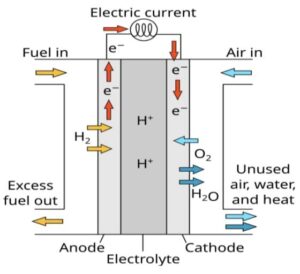
How does the Hydrogen Train work? Read here.





Add comment