

 changeadmin
India’s Minister for Environment, Forest and Climate Change, Mr Bhupender Yadav, chaired the 91st Meeting of the Standing Committee of the National Board for Wildlife (SC-NBWL) today at Coimbatore.
The Standing Committee reviewed the progress made on several important directions issued by the National Board for Wildlife (NBWL) and the Standing Committee in its earlier meetings, reaffirming the Government’s commitment to science-based wildlife conservation, the protection of critical wildlife habitats, the strengthening of ecological connectivity, and the ensuring of sustainable development.
The Committee reviewed the progress on decisions taken during the 7th Meeting of the National Board for Wildlife, chaired by the Prime Minister, and deliberated on several important national conservation initiatives.
Addressing the meeting, Mr Yadav emphasised that wildlife conservation remains central to India’s environmental governance and that scientific planning, habitat connectivity and effective mitigation measures should continue to guide decision-making on developmental projects in and around wildlife habitats.
Further, the Minister emphasised that solution-based policy interventions are needed, involving technological and sociological studies, utilising traditional knowledge in wildlife conservation.
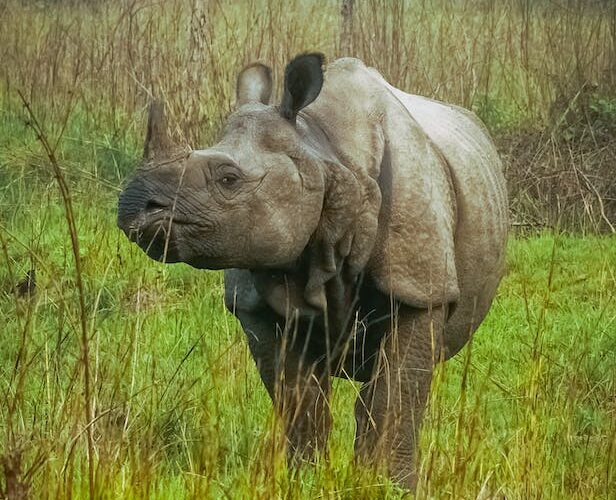
Important issues discussed in the meeting included the long-term conservation strategy for the Greater One-horned Rhinoceros based on the Rhino DNA Indexing System; future conservation strategy for the Great Indian Bustard; and inclusion of the Pygmy Hog under the Species Recovery Programme.
The Committee also reviewed the progress of conservation programmes for threatened species and released important scientific publications on the Rhinoceros, Sloth Bear, and Great Indian Bustard.
The Standing Committee considered more than 100 proposals across the country involving activities such as roads and bridges, defence infrastructure, drinking water supply, communication towers, power transmission lines, optical fibre networks, pipelines, mining, renewable energy, educational institutions, public infrastructure and other essential development works requiring wildlife clearance under the provisions of the Wildlife (Protection) Act, 1972.
The proposals were appraised on the basis of their ecological impacts, importance for public welfare and national development, and the adequacy of mitigation measures to ensure conservation of wildlife and their habitats.
The Standing Committee reiterated the Government’s commitment to conserving wildlife and wildlife habitats while facilitating sustainable development.
The Committee emphasised that developmental projects of national importance should be implemented with appropriate safeguards to minimise adverse impacts on wildlife and their habitats, in accordance with the provisions of the Wildlife (Protection) Act, 1972 and other applicable environmental safeguards.






Add comment