


 changeadmin
India’s Minister of Textiles, Mr Giriraj Singh, inaugurated the National Seminar on “New Age Fibre: Innovation, Research and the Road Ahead” today in New Delhi.
The seminar was organised by the Ministry of Textiles through the National Jute Board, which brought together a wide spectrum of stakeholders, including policymakers, industry leaders, researchers, innovators, startups, and academia, to deliberate on the transformative potential of emerging sustainable fibres for India’s textile sector.
The event reflects the Indian government’s strong commitment towards promoting sustainability, innovation, and self-reliance in the fibre ecosystem.
Addressing the seminar, Minister Mr Giriraj Singh underscored the strategic role of new-age fibres in promoting sustainability, reducing environmental impact, and generating employment opportunities.
He further stated that regular virtual meetings will be conducted with stakeholders to ensure continuous engagement, monitor progress, and accelerate the development of the new-age fibre ecosystem.
The Minister highlighted that these fibres can play a crucial role in achieving the vision of Atmanirbhar Bharat while contributing to India’s commitments toward sustainable development.
The seminar extensively covered a range of emerging new-age fibres, including pineapple fibre, flax fibre, milkweed fibre, bamboo fibre, hemp fibre, nettle fibre, banana fibre, ramie fibre, and kapok fibre.
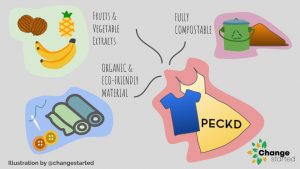
These fibres are being increasingly recognised for their eco-friendly, biodegradable, and versatile characteristics.
Their development is expected to contribute significantly to agricultural diversification, rural livelihood generation, and the expansion of value-added products in both domestic and international markets.
The programme commenced with the inauguration of the “New Age Fibres Expo” by the Minister of Textiles, followed by a walkthrough of the exhibition stalls that showcased innovative products and technologies based on natural fibres.
Welcoming the dignitaries and participants, Mr Shashi Bhushan Singh, Secretary, National Jute Board, underlined the importance of new-age fibres in achieving sustainability, enhancing farmers’ income, and strengthening India’s global position in eco-friendly textiles.
A significant highlight of the inaugural session was the launch of the New Age Fibres booklet and the release of detailed reports prepared by three Task Forces on New Age Fibres. These reports are expected to guide the sector’s structured development.
In her keynote address, Mrs Padmini Singla, Joint Secretary (Fibre), Ministry of Textiles, outlined the domestic and global landscape of new-age fibres, noting the rapid global shift toward biodegradable and sustainable materials and the increasing demand for environmentally responsible textile solutions.
The first thematic session, titled “Foundational Framework: Building the NAF Blueprint,” laid the groundwork for a structured approach to the development of new-age fibres.
Moderated by Mrs Vrunda Manohar Desai, Textile Commissioner, the session featured presentations from the three Task Forces constituted to examine different fibre categories.
The Task Forces presented detailed findings on flax, milkweed and hemp; bamboo, ramie and sisal; and banana, pineapple and kapok.
The discussions highlighted current resource availability, cultivation practices, fibre extraction technologies, supply chain gaps, and the need for institutional coordination.
The session emphasised the importance of creating a comprehensive policy framework, supported by research institutions, standardisation mechanisms, and capacity-building initiatives, to enable the scaling up of production and processing.
The second session, “The Entrepreneurial Edge: Real-World Models for NAF Growth,” brought valuable industry insights into focus. Moderated by Mrs Padmini Singla, Joint Secretary (Fibre), the session featured leading entrepreneurs and industry representatives who shared their experiences in developing commercially viable business models around new-age fibres.
Industry leaders showcased innovations in milkweed fibre applications, flax and hemp textiles, bamboo composites, ramie processing, banana fibre products, and pineapple leaf fibre (PALF) utilisation.
The session emphasised the roles of startups, private-sector participation, and technological innovation in driving growth in this emerging segment.
It also highlighted the importance of building strong market linkages, brand positioning, and investment ecosystems to support entrepreneurship in new-age fibres.
The third session, “Breaking the Barrier: Solving the Techno-Commercial Puzzle of NAF,” addressed key challenges that currently hinder the widespread adoption and commercialisation of these fibres.
Moderated by Dr Gouranga Kar, Director, CRIJAF, the session brought together experts from premier research institutions, government departments, and industry.
Discussions focused on critical issues, including improving fibre extraction and processing technologies, developing cost-effective machinery, addressing logistical challenges, and ensuring quality consistency.
The panel also emphasised the need to strengthen research and development efforts, promote farmer awareness, encourage cluster-based processing models, and establish effective supply chains linking producers to markets.
Stakeholders called for increased collaboration between agriculture, textiles, and industry sectors to overcome existing bottlenecks.
The fourth and final session, “The 2030 Roadmap: A Strategic Plan for NAF Evolution,” focused on long-term vision and policy direction for integrating new-age fibres into the mainstream textile economy.
Moderated by Mrs Amrit Raj, Jute Commissioner & DC Handicrafts, the session included inputs from policymakers, experts, and industry representatives.
The discussions underscored the importance of mainstreaming these fibres through policy support, enhancing inter-ministerial coordination, building infrastructure for processing and value addition, and developing standards and certifications for global competitiveness.
Participants also emphasised the need to promote exports, strengthen branding of Indian sustainable fibres, and align the sector with international sustainability frameworks.
The session culminated in outlining a strategic roadmap to scale production, improve value chains, and position India as a leader in sustainable textile innovation by 2030.
The deliberations and recommendations from the seminar are expected to form the basis for a comprehensive New Age Fibre policy framework aimed at fostering innovation, strengthening research and development, building resilient value chains, and enhancing India’s competitiveness in the global sustainable textiles market.






Add comment