

 changeadmin
India is home to more than half a dozen Natural UNESCO World Heritage Sites, such as the Western Ghats, Kaziranga National Park, Nanda Devi National Park, Valley of Flowers National Park, etc.
One of the largest sites on the list is the Sundarbans Mangrove Forests, located at the confluence of the Ganges, Brahmaputra, and Meghna rivers in the Bay of Bengal.
Sundarban mangrove Forests are the largest mangrove forests in India and one of the most extensive in the world. The forest spans India and Bangladesh and is recognised globally for its biodiversity, ecological significance, and the critical role it plays in protecting the coastal areas from natural disasters.
The Sundarbans are characterised by tidal waterways, mudflats, and small islands. The region is known for its dense network of rivers, streams, and estuaries, making it a crucial habitat for different species of flora and fauna.
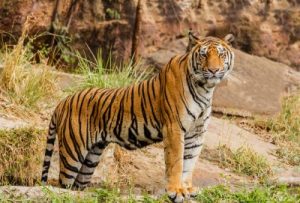
The region is most famous for being home to the elusive and endangered Royal Bengal Tiger (Panthera tigris tigris). It is estimated that over 100 tigers live in the Indian portion of the forest.
The Sundarbans region is a critical stopover for migratory birds and is home to species such as the Bengal florican, spot-billed pelican, and kingfishers. The saltwater crocodile (Crocodylus porosus) is another iconic species that thrives in the mangrove swamps of the Sundarbans.
Apart from Sundarbans in West Bengal, other mangroves in India are found in the coastal states of Odisha, Andhra Pradesh, Tamil Nadu, Kerala, Gujarat, Maharashtra, and the Andaman and Nicobar Islands.
The Pichavaram Mangrove Forest, along the southeastern coast in Tamil Nadu, is one of the largest and best-preserved mangrove ecosystems in India. The region has tall and short mangrove trees, which thrive in the brackish water formed by the mixing of freshwater from rivers and saline water from the Bay of Bengal.
The Gulf of Kutch Mangroves, located on the eastern coast of the Arabian Sea, stabilise the coastline and reduce the impact of storms and cyclones, which are frequent in this region.
Mangroves in India are vital coastal ecosystems that provide numerous ecological, economic, and social benefits. They play a key role in protecting coastal areas, supporting biodiversity, and contributing to the livelihoods of local communities.
The collection of Sundarbans honey is a traditional activity that has been practised for centuries and is a source of employment for thousands of locals. Areas like the Sundarbans and Pichavaram also attract tourists and researchers due to their rich biodiversity and unique landscapes, fostering ecotourism.
India’s total mangrove cover is 4,991.68 sq km, making up 0.15% of the country’s total geographical area as per the India State of Forest Report (ISFR) 2023. In comparison to ISFR 2019 and ISFR 2023, there has been an increase of 16.68 sq km in the country’s mangrove coverage.
Mainly because of Sundarbans, West Bengal has the highest mangrove coverage in India, accounting for 42%, followed by Gujarat at 23% and the Andaman & Nicobar Islands at 12%.
State and year-wise break-up of Mangrove Cover in India (in sq km)
| S. No | State/UTs | Mangrove Cover as per ISFR 2019 | Mangrove Cover as per ISFR 2023 |
| 1 | Andhra Pradesh | 404.00 | 421.43 |
| 2 | Goa |
26.00 |
31.34 |
| 3 | Gujarat |
1177.00 |
1164.06 |
| 4 | Karnataka | 10.00 | 14.20 |
| 5 | Kerala | 9.00 | 9.45 |
| 6 | Maharashtra | 320.00 | 315.09 |
| 7 | Odisha | 251.00 | 259.06 |
| 8 | Tamil Nadu | 45.00 | 41.91 |
| 9 | West Bengal | 2,112.00 | 2119.16 |
| 10 | Andaman & Nicobar Islands |
616.00 |
608.29 |
| 11 | Daman and Diu | 3.00 | 3.86 |
| 12 | Puducherry | 2.00 | 3.83 |
| Total | 4,975.00 | 4991.68 |
Threats to the Mangroves
Rising sea levels and increasing temperatures threaten the delicate balance of the mangroves in India, causing saltwater intrusion and disrupting the habitats of species reliant on freshwater.
Human-induced factors, like rapid coastal development and infrastructure projects, such as ports, resorts, and housing, often lead to the destruction of mangrove habitats. Further, industrial effluents, sewage, and plastic waste are significant sources of pollution in coastal areas, affecting mangrove health.
Additionally, the expansion of shrimp farming, particularly in the coastal areas of Andhra Pradesh and Tamil Nadu, has led to the destruction of large tracts of mangrove forests.
In Sundarbans, illegal activities such as poaching of tigers, hunting of crocodiles, and unsustainable honey collection are major concerns. The construction of the shipping lanes, power plants and Mundra Port along the Gulf of Kutch Mangroves has led to habitat loss and pollution.
MISHTI Scheme to Protect Mangroves in India
Announced in the budget 2023, on 5th June 2023, the Indian government launched the ‘Mangrove Initiative for Shoreline Habitats & Tangible Incomes (MISHTI)’ to restore and promote mangroves as a unique, natural ecosystem and to preserve and enhance the sustainability of the coastal habitats.
The objective of MISHTI is to restore mangrove forests by undertaking mangrove reforestation and afforestation measures along the Indian coast. The Coastal Zone Regulation Notification of 2019 (CRZ) under the Environment (Protection) Act, 1986, classifies Mangroves as Ecologically Sensitive Areas (ESAs), permitting only very limited activities in these areas.
Additionally, provision of a 50-meter buffer zone along mangroves is also specified as CRZ-IA in case the mangrove cover is greater than 1,000 square meters. In such instances, if any mangroves are likely to be affected during the developmental process, three times the number of mangroves lost must be replanted as per the provisions of the CRZ-2019 regulation.
Further mangrove areas and mangrove ecosystems are also protected under the relevant provisions of the Van (Sanrakshan Evam Samvardhan) Adhiniyam, 1980, The Wildlife (Protection) Act, 1972 and state-specific laws
This five-year initiative (2023-2028) seeks to restore and promote mangroves along India’s coastline, enhancing coastal habitats’ sustainability.
Financial support of Rs. 100 crore has been allocated through the Compensatory Afforestation Fund Management and Planning Authority (CAMPA) as the initial project outlay for the scheme.
Wrapping Up
Mangroves are critical to India’s coastal ecosystem and the livelihoods of millions who live near or depend on coastal resources. The loss of these mangroves could jeopardise the region’s and country’s ecological stability.
Let us hope the MISHTI Scheme can put concerted efforts into the conservation and sustainable management of mangroves in India.




Add comment