

 changeadmin
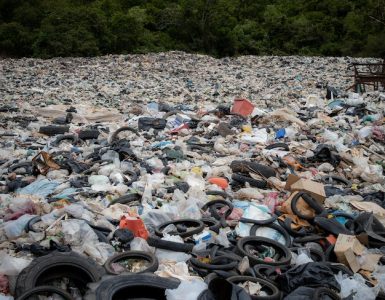
“In a hole in the ground, there lived a plastic (bag). In many holes across many grounds there lived colonies of plastic (bags). It was a community of bratty, old (yet healthy enough) single-use plastic while there were also the younger ones – sturdy yet equally vile. With their pompous entry in the world as harbingers of hope, humankind could not believe the evil they let out into the open – fighting against Mother Nature to bring Her down, unfortunately, aided by the human vice. On its eleventy-second birthday, however, things were about to change …”
“Not everybody’s bad though. I’m sure Plastic has its good side as well.”
“Ah, well! One needs ‘recycling’ to stay fresh, positive, and to build a future worth living!”
***
I have always admired primary school teachers. Imagine explaining what planets are, what a solar system and galaxy means to a 7-year-old! While technology has advanced leaps and bounds today, imagine doing this three decades (or more) ago.
I have always been curious to know what it takes to explain matters requiring such high cognition and ‘depth of imagination’ (as Anne of Green Gables would call it). Unless obviously if you could weave it into a story! Or if you could help create an experience one could never forget, for the young and the old alike.
Plogging experience collecting Plastic Waste
Almost about a year ago, on the 150th birth anniversary of Mahatma Gandhi, on a bright blue cold morning, I got to experience something extraordinary. We have read so much about the havoc of plastic waste and I am sure most of us have readily adopted cloth bags in lieu of plastic. However, my first plogging experience on that morning has had a profound impact on me, the story of which I bring to you today.
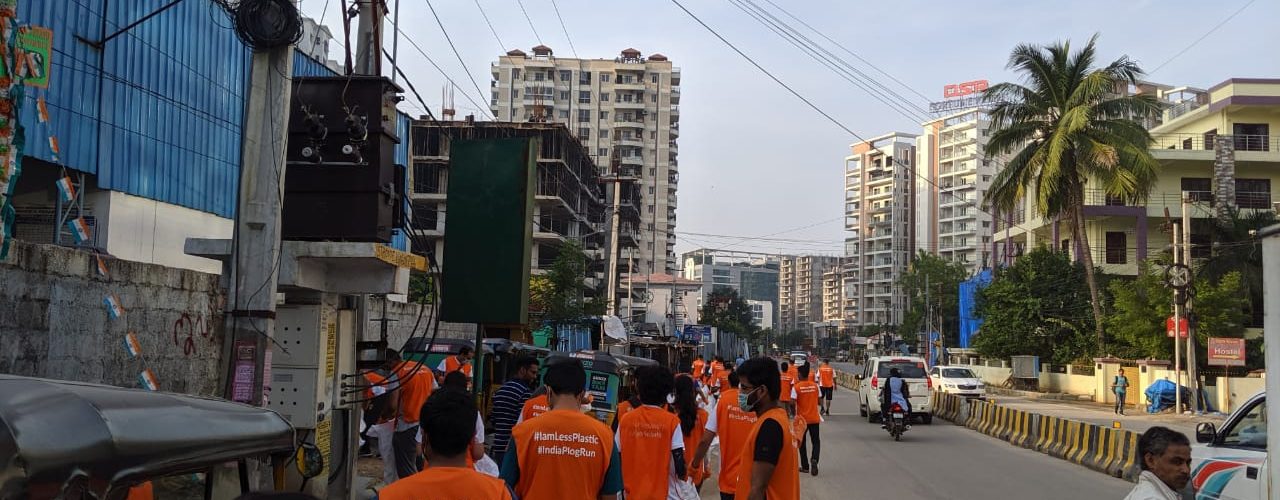
Accompanied by a friend who runs a social initiative to behaviorally drive change in the mindset of people for adopting sustainable practices, we set out for our maiden Plog Run (called India Plog Run) in a swanky area at Hyderabad for a stretch of 3 km.
We set out in a group of around 60 participants, trailing almost all the time and rigorously scouting any plastic waste that we could find – be it the plastic swelling out of garbage bins or been thrown out into the open unceremoniously. At first glance, one could hardly see any plastic waste lying around but a change in perspective could reveal otherwise.
It was a run I would cherish for a lifetime – carrying a bag full of plastic waste collected, getting heavier with each sprint, and the conversations with fellow ploggers – be it the jokes interspersed with serious connotation on the lack of mass awareness or just humming the kachra song.
My bag was half full when I came across a patch of land that had a surprisingly large amount of plastic thrown unattended – shampoo bottles, soap packaging, packets of chips and biscuits, gutkha, single-use plastic, empty oil cans, and whatnot! While I was busy rummaging through the open plot of land for plastic waste, unexpected help came my way. These two kids, no more than 6 years of age, came running to me.
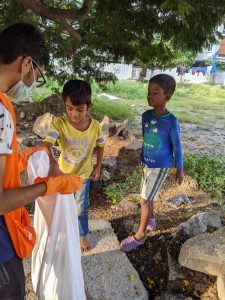
“Bhaiya, what are you doing?” One of them quipped.
“I am collecting plastic waste that has been thrown by people. Look at this…!” I pointed at an empty Maggi noodles packet. “Do you know where this belongs?”
They looked confused. After much deliberation one of them answered, “Not there!”, pointing at the hole in the ground where it lay.
“In here!” The other added pointing at the bag I was carrying.
They looked visibly sad. With no further questions, they embarked on the odyssey to collect the plastic waste to help me out. My waste bag swelled and so did their enthusiasm. It was a playful game for the kids and together we cleaned the entire plot of land. Their questions grew – what would you do of this waste? Why was it not thrown in the dustbin? Our teacher told us that the waste goes in the bin!
Those 45 mins were so fulfilling. We bade the kids adieu (who now wanted to tell about their experience to their parents) after washing their hands and continued with the run. I do not know if they understood the impact their action had that day on the environment, but they surely understood and had it reinforced in their minds that plastic should go in bins and not on streets. I am sure whenever they see plastic lying on the streets, they would remember that day when they helped clean the environment as naïve young kids. I am sure their experience would inspire their friends and family in the years to come.
With a huge smile on my face and renewed enthusiasm, we moved forward in the run. I could see those around me trying to understand what we were doing – some curious while some laughing at us. I could see people stopping their vehicles to see what we were doing. An Uber cabman, waiting to get a booking, asked my friend about it and once he knew the overarching goal, decided to help us while we crossed that road.
It was during this time when the Uber cabman was helping us out, that I noticed a little girl accompanied by her dad collecting plastic waste. I could hear her dad telling her, “Grab all the plastic and put it in this bag.” And she obliged, collecting all she could lay her hands on. She seemed determined to collect as much waste as she could to fill the bag full! Just a little further down the road, she encountered a coconut water seller.
“Bhaiyaji, ye saare straws mujhe de sakte ho? Ye plastic k hai aur mai plastic collect kar rahi hoon! (Can you please give me all these straws? This is plastic and I am collecting it.)”, she said eyeing the plastic straws that were out of her reach.
“Beta, aisa nahi karte. Unhe zarurat hai straws ki warna customers nariyal paani kaise piyenge? (Don’t ask for it, daughter. He needs the straws. How will his customers, otherwise, drink coconut water?)”, her dad quickly interjected.
She hardly seemed convinced (quite evident from her facial expressions). But the might of the elders prevail, and she continued, quickly moving her focus to the ground for any visible signs of plastic waste.
It got me thinking, what are the cheaper alternatives available for the coconut water sellers? Or can the consumers not carry a bottle themselves and have it poured in it? I do not know what the best solution is but I did believe then that the kid’s determination, irrespective of whether she truly understood its importance, is something worth learning from to create a better world for tomorrow.
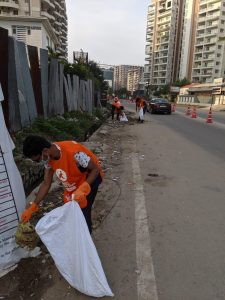
Shortly afterward, we completed the run (we were the last ones to reach the destination) and I could not help but share this experience with anybody and everybody I could speak with that day. On average, every person who participated in the India Plog Run in Hyderabad that day collected about 3-4 kgs of plastic waste. It was surprising that there was so much plastic trash in a “swanky” area, on one of my most traveled roads in the city, which apparently looked so clean!
Later that evening, I decided to narrate the experience to my young nephew because these are some things that need to be imbibed at a young age and while I am sure it’s been taught about in school, I thought I could try and share it with him in the most Hobbitish way possible (he is a huge fan of the franchise).
It is through stories that we learn the best and it is through them that we can bring about a long-term change. And while I end this story here, I wish it inspires you to spread the message across, not only by action but also through the power of words.
And, thus, with my nephew by my side, I started,
“In a hole in the ground….”


Add comment