

 changeadmin
Bengaluru-based battery-as-a-service (BaaS) startup Yuma Energy has received $35 million (~₹330 crore) in a Series A funding round led by existing backer Magna International.
Yuma Energy was co-founded in 2022 as a joint venture between electric mobility firm Yulu and global automotive supplier Magna International.
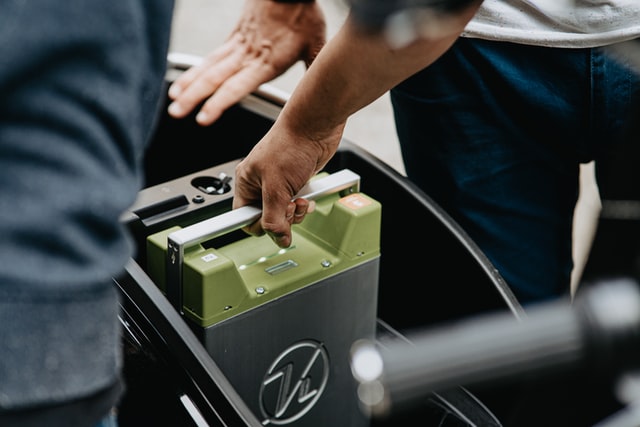
Yuma provides open-access swapping infrastructure to Yulu’s fleet as well as third-party OEMs and last-mile delivery operators. The company operates one of India’s largest battery-swapping networks for electric two- and three-wheelers.
Yuma’s core proposition is to decouple battery ownership from vehicle ownership, reducing upfront electric vehicle (EV) costs and addressing range anxiety through a dense, high-uptime swapping grid.
The company manages the entire battery lifecycle —procurement, charging, maintenance, and redeployment—while offering “swap-and-go” convenience at fixed touchpoints.
This is the startup’s first institutional round after its formation, and it deepens Magna’s majority stake in the joint venture.
Magna’s total commitment to Yuma reaches roughly $87 million (~₹825 crore), underscoring a long-term bet on battery swapping as an enabling layer for India’s EV transition.
Yuma plans to use the funds primarily to expand the battery fleet, add new charging nodes, and enter additional cities; a portion will strengthen Yuma’s technology platform for safety, reliability, and uptime.

It also intends to increase its strategic focus by scaling its presence in the electric two- and three-wheeler ecosystem and broadening the customer base beyond Yulu to more OEMs and fleet partners.
Alongside the funding, Yuma Energy has acquired battery technology firm Grinntech to bolster its cell-level expertise and manufacturing capabilities.
This vertical integration is designed to improve battery performance, lifespan, and cost economics—critical levers for a BaaS business where each swap cycle affects unit profitability.
For a market dominated by two- and three-wheelers, battery swapping offers a pragmatic path to electrification: lower vehicle prices, faster “refuelling,” and shared infrastructure that can serve multiple brands.
Yuma’s network density and operational data give it an edge in reliability, while Magna’s global automotive experience adds engineering and supply-chain heft.
As Indian cities tighten emission norms and gig economy demand grows, Yuma Energy’s expanded grid could become as essential as fuel stations were in the ICE era—only cleaner, smarter, and shared across fleets.





Add comment