

 changeadmin
In June 2025, India achieved a landmark in its energy transition by reaching 50% of its installed electricity capacity from non-fossil-fuel sources, more than five years ahead of the target set in its Nationally Determined Contributions (NDCs) under the Paris Agreement.
Over the last six months of 2025, there has been sustained momentum toward net additions from non-fossil-fuel sources, with non-fossil-fuel capacity reaching almost 52% of total installed electricity capacity.
As of 31st December 2025, the total installed generation capacity is 5,13,730 MW, comprising 2,46,942 MW (48.07 %) of fossil-fuel sources and 2,66,788 MW (51.93 %) of non-fossil fuel sources (including Nuclear).
The details of India’s installed generation capacity, including the share of renewable and non-fossil fuel sources, as of December 2025, are as follows.
|
|
Installed Capacity (MW) |
% Share in Total |
|
Coal |
2,19,610 |
42.75% |
|
Lignite |
6,620 |
1.29% |
| Gas | 20,122 |
3.92% |
|
Diesel |
589 |
0.11% |
| Total Fossil Fuel |
2,46,942 |
48.07% |
|
Renewable Energy Sources (including Hydro) |
2,58,008 |
50.22% |
|
Hydro (including Pumped Storage) |
50,915 | 9.91% |
| Wind, Solar & Other RE | 2,07,093 | 40.31% |
|
– Wind |
54,511 |
10.61% |
|
– Solar |
1,35,810 | 26.44% |
|
– Biomass |
10,757 | 2.09% |
|
– Waste to Energy |
857 | 0.17% |
|
– Small Hydro |
5,159 | 1.00% |
|
Nuclear |
8,780 |
1.71% |
|
Total Non-Fossil Fuel |
2,66,788 |
51.93% |
|
Total Installed Capacity |
5,13,730 | 100.0% |
In renewable energy alone, a total of 48,436 MW of capacity was added last year. This includes 37,945 MW of solar power, 6,347 MW of wind power, 3,820 MW of large hydro and 236.68 MW of waste-to-energy.
The details of the renewable energy capacity in 2025 are as follows.
| Renewable Energy Source | Energy Added |
|---|---|
| Small Hydro Power | 58.06 MW |
| Wind Power | 6,347.77 MW |
| Bio Mass Power/Cogeneration | 29.10 MW |
| Waste to Energy | 236.68 MW |
| Solar Power | 37,945.22 MW |
| Large Hydro | 3,820.00 MW |
| Total Renewable Energy Sources | 48,436.83 MW |
India has set a target of achieving 500 GW of non-fossil capacity by 2030 and net-zero emissions by 2070.
To achieve its ambitious goals, the government has undertaken several initiatives to promote and accelerate the development of renewable energy capacity in the country.
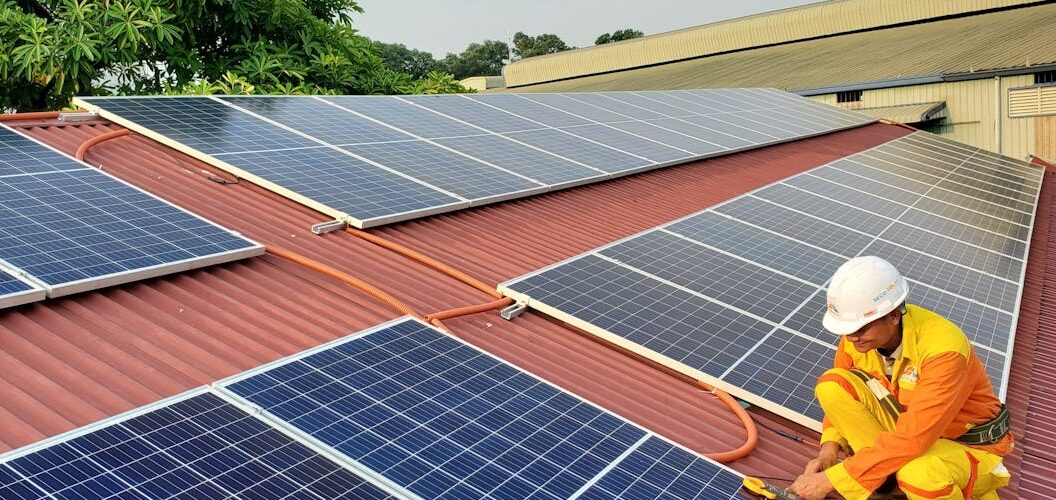
Apart from incentives to establish large solar parks, other schemes to boost the country’s solar energy capacity, such as PM-KUSUM (for farmers), PM Surya Ghar Muft Bijli Yojana (for solar rooftops), the National Programme on High-Efficiency Solar PV Modules, and the New Solar Power Scheme (for tribal and villages) have been launched.
Steps have also been taken to augment energy storage systems. In September 2023, the government approved a Viability Gap Funding (VGF) scheme to develop Battery Energy Storage Systems (BESS). BESS capacity of 13.22 GWh is under implementation with a budgetary allocation of Rs 3,760 crores under this scheme.
In June 2025, the Ministry of Power approved another VGF scheme for the development of 30 GWh of BESS capacity, with financial support of Rs 5,400 Cr from the Power System Development Fund (PSDF).
To leverage hydro power, 12,973.5 MW of hydroelectric projects are under construction, and 4,274 MW of hydroelectric projects are at various stages of planning and are targeted for completion by 2031-32.
Furthermore, Nuclear power is also being explored as a potential to ensure long-term energy security and is vital to India’s clean energy transition towards net-zero by 2070. The Government has set an ambitious target of 100 GW of nuclear power capacity by 2047.




Add comment