


 changeadmin
Biodiversity is central to India’s environmental and development priorities. It supports food security, livelihoods, climate resilience, and ecological balance. India’s forests, wetlands, mountains, coasts, deserts, grasslands, and marine ecosystems sustain diverse species and communities. Millions of local communities depend on these natural resources for daily life.
Given its significance, India continues to uphold its commitments to conserving natural capital and biodiversity through policies, institutions, and community participation aligned with global frameworks.
Over the past decade, India has adopted an integrated approach to biodiversity conservation that combines scientific management, habitat restoration, species recovery programmes, and community participation.
Significant efforts have been made to expand protected areas, strengthen wildlife monitoring, restore degraded ecosystems, and promote sustainable use of biological resources.
India’s biodiversity framework combines laws, policies, institutions, and programmes for conservation and sustainable use. It also promotes fair benefit sharing while aligning national priorities with global biodiversity commitments.
The Biological Diversity Act, 2002 (Amended in 2023)
The Biological Diversity Act, 2002, is India’s principal legal framework for conserving biological diversity, promoting sustainable use, and ensuring fair benefit sharing.
The Act provides the statutory basis for India’s biodiversity governance through institutions at the national, state, and local levels.
The law also supports the documentation and protection of biological resources and associated traditional knowledge.
It also provides for access and benefit-sharing, helping to ensure that the use of biological resources is linked to equitable returns for their providers.
The Biological Diversity (Amendment) Act, 2023, further strengthened this framework by making implementation more facilitative and aligned with current needs.
It supports research, innovation, and traditional knowledge-based practices while improving compliance and governance efficiency.
The amendment also reinforces community participation and the documentation of local biodiversity, which are important for effective conservation.
Together, the Act and its amendment provide a balanced legal foundation for India’s biodiversity protection efforts through –
Three-tier governance structure
The Biological Diversity Act, 2002, provides for a 3-tier governance structure. This structure helps carry global and national biodiversity goals down to villages, towns and cities.
At the national level, the National Biodiversity Authority (NBA) advises on conservation, sustainable use, and benefit-sharing.
At the state and union territory level, the State Biodiversity Boards (SBBs) and Union Territory Biodiversity Councils (UTBCs) adapt these priorities to regional needs.
At the local level, Biodiversity Management Committees (BMC) prepare People’s Biodiversity Registers (PBRs) and support community action.
Scientific and technical support
Specialised scientific institutions strengthen this governance system. The Zoological Survey of India (ZSI) and the Botanical Survey of India (BSI) document animal and plant diversity.
The Forest Survey of India (FSI) maps forest and tree cover in periodic State of Forest Reports.
The National Tiger Conservation Authority (NTCA) and state forest departments support the conservation of tigers and their habitat.
Under Section 39 of the Biological Diversity Act, 2002, 20 institutions have been designated as national repositories for different categories of biological resources across the country.
Two additional key institutions have recently been notified, further strengthening this national repository network for safe custody and documentation.
Community-level institutions
Local institutions reflect the role of community-led action in achieving global biodiversity goals. BMCs across the country are preparing and updating People’s Biodiversity Registers.
These registers capture species, habitats and traditional knowledge at the community level. They help identify local priorities for conservation and sustainable use.
National campaigns to update and digitise the registers are further strengthening this grassroots foundation. This architecture has enabled strong recent gains on protected areas, forest and tree cover, species conservation and local stewardship.
National Biodiversity Authority Fund (NBAF)
The National Biodiversity Authority Fund is a statutory fund created under section 27 of the Biological Diversity Act.
It further supports biodiversity governance by providing a mechanism for benefit sharing and conservation-related use.
People’s Biodiversity Register (PBR)
The People’s Biodiversity Register is a local biodiversity database prepared with community participation.
It records biological resources, habitats, landraces, folk varieties, cultivars, domesticated stocks, breeds, microorganisms, and associated traditional knowledge.
Under the Biological Diversity Act, the Biodiversity Management Committee prepares it in consultation with local people.
PBR is an important tool for documentation, conservation, and benefit sharing. Nearly 2,72,648 such registers have been prepared across the country.
This shows that the instrument has gained practical importance in India’s biodiversity governance. It also reflects the country’s emphasis on local documentation as a base for stronger conservation action.
National Biodiversity Strategy and Action Plan (NBSAP 2024-2030)
The National Biodiversity Strategy and Action Plan (NBSAP) provides India with a long-term policy direction for conserving biodiversity and using it sustainably.
It translates global biodiversity commitments into national priorities suited to India’s ecological and developmental context.
The plan also helps guide coordinated action across ministries, institutions, and local bodies. It reflects a whole-of-government and whole-of-society approach to biodiversity protection.
The updated plan for 2024 to 2030 aligns with the Kunming-Montreal Global Biodiversity Framework (KMGBF), giving it strong international relevance.
KMGBF is an international agreement adopted in 2022 by 196 nations to halt and reverse biodiversity loss by 2030 and achieve a vision of “living in harmony with nature” by 2050.
Recently, India submitted its Seventh National Report (NR-7) to the Convention on Biological Diversity, reaffirming its commitment to the Convention’s objectives.
The report lays out the status of biodiversity, policies and targets, and major actions taken across sectors and levels of government.
National Red List Roadmap (2025-2030)
National Red List Roadmap is a key step in strengthening India’s biodiversity conservation architecture and advancing its international commitments.
Led by Zoological Survey of India (ZSI) and Botanical Survey of India (BSI), with support from IUCN-India and the Centre for Species Survival, India, the roadmap will establish a nationally coordinated, science-based threatened-species assessment system.
It will also help India identify conservation priorities more effectively and build a stronger evidence base for policy and action.
The roadmap aligns with India’s biodiversity commitments under the KMGBF, particularly the goal of improving species status assessments and guiding conservation action by 2030.
Expanding forests and protected areas
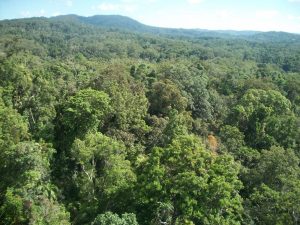
India’s total forest and tree cover stands at about 8.27 lakh square kilometres, covering 25.17 per cent of the country’s geographical area.
The recorded forest area is around 7.75 lakh square kilometres, of which more than 5.20 lakh square kilometres is actual forest cover.
India also has over 1134 protected areas, covering more than 1.88 lakh (1,87,592) square kilometres and supporting critical habitats and ecosystem services across the country.
Strengthening species conservation
India has achieved globally recognised success in conserving flagship species. The tiger population increased from 2,226 in 2014 to 3,682 in the latest estimates.
Species databases and monitoring systems are also being strengthened through institutions such as the Wildlife Institute of India, ZSI, and BSI.
Deepening community and governance outcomes
India has established a wide network of More than 2,76,653 BMCs across rural and urban local bodies. These committees have prepared more than 2,72,648 People’s Biodiversity Registers across the country.
A national campaign is also underway to update, verify and digitise these registers, turning them into ePBRs. This effort is strengthening the systematic documentation of local species, habitats, and traditional knowledge.
It also reflects the government’s focus on empowering communities as key partners in biodiversity stewardship.
Access and Benefit Sharing (ABS) Mechanism
The Implementation of ABS is anchored in the Biodiversity Act, which provides the legal basis for regulating access to biological resources and associated traditional knowledge and for ensuring fair and equitable sharing of benefits with benefit claimers, including local communities.
During 2017–2026, India issued 12,830 benefits arising from their utilisation approvals from dedicated funds created to support benefit-sharing and conservation-linked activities.
As of May 2026, nearly Rs. 145 crore has been released to beneficiaries across the country, benefiting around 11,000 Biodiversity Management Committees.
From Today’s Gains to Tomorrow’s Goals
India’s biodiversity efforts are now rooted in a strong blend of laws, institutions and community‑led action, aligned with global frameworks under the Convention on Biological Diversity.
India is strengthening forest and tree cover, expanding protected areas, improving species conservation and deepening local stewardship in a coordinated manner.
Looking ahead, updated strategies, dedicated financing and transparent national reporting place biodiversity at the heart of sustainable and inclusive development.
The Government remains committed to further enhancing conservation outcomes by 2030 and beyond, so that healthy ecosystems, secure livelihoods and national growth reinforce each other in a positive cycle.





Add comment