

 changeadmin
In an era where biodiversity hangs by a thread, zoos stand at the heart of a fierce global debate: Are they noble guardians of endangered species or relics of exploitation?
With over a million species at risk of extinction—driven by habitat loss, climate change, and poaching—zoos worldwide house many of these species, offering close encounters that ignite passion for conservation.
Yet critics and animal rights groups decry them as prisons, where majestic tigers languish, and elephants sway in distress, their wild spirits crushed by iron cages and concrete walls.
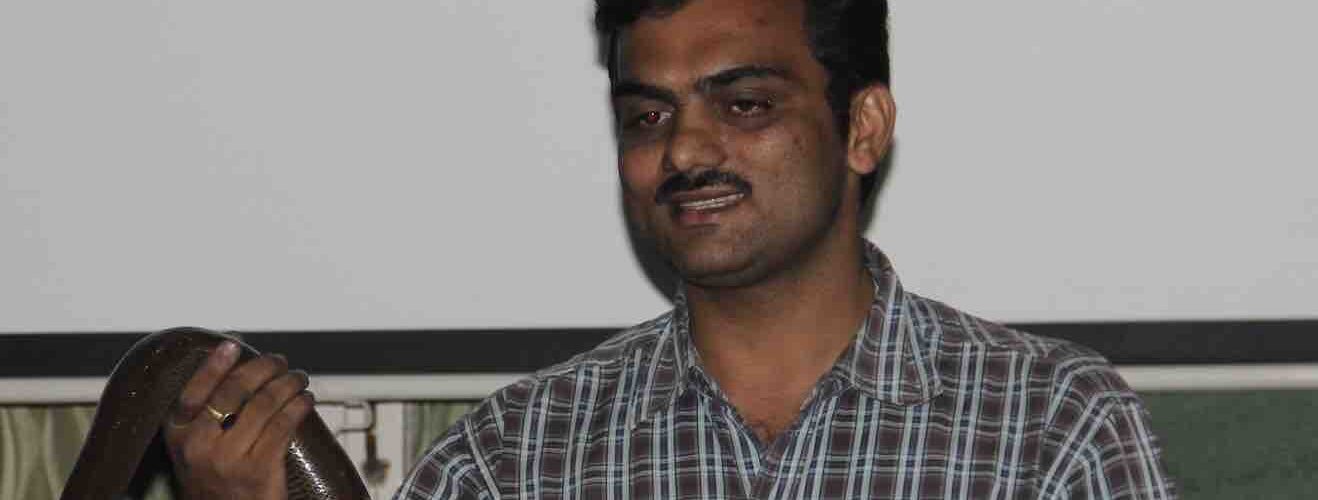
This tension demands scrutiny and discussion, and we sat down with a wildlife and zoo development specialist, Dipak Sawant.
With over 17 years of experience in Indian zoos, Dipak shares his perspectives on what makes zoos relevant to society. His insights and quotes like “We care what we have seen”—reveal zoos as flawed yet indispensable bridges to wild hearts.
He demystifies evolution over the centuries—from Roman gladiatorial pits to immersive fourth-generation havens— and the zoo has been tackling welfare science, tech integration, and the climate crisis.
Dipak argues that zoos play a crucial role in wildlife conservation, education, and public engagement, evolving far beyond mere entertainment.
Amid habitat erasure (over 48,000 species worldwide are currently threatened with extinction), zoos aren’t optional; they’re arks. But only if balanced: welfare first, education paramount, entertainment secondary.
Here’s the synopsis of the discussion with Dipak Sawant’s candid chat with us. For the full conversation, refer to the Change Started YouTube channel.
Dipak Sawant’s Journey With Zoo
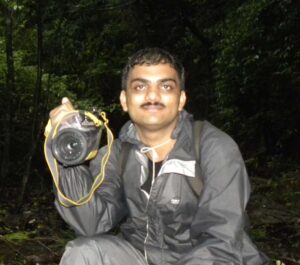
Dipak Sawant holds a Bachelor’s and Master’s in Environmental Sciences from Bharati Vidyapeeth, Pune. His passion for wildlife began in childhood, when he visited zoos and spent his free time observing operations.
Dipak, while remembering his childhood days, said, “I was interested in wildlife, though I was not sure if I wanted to make my career in wildlife. I used to visit zoos with my parents. Coincidentally, there was a zoo located near my house.”
He started teaching environmental awareness in municipal schools, then conducted research on tiger monitoring at the Wildlife Institute of India, an autonomous agency for research and training in the field of wildlife conservation
This led to his first role in a zoo as curator at Katraj Zoo in Pune, where he served for six years. He later served in a small reptile and bird park in Chinchwad, Pune, overseeing its redevelopment and redesign for about two years.
After this, Dipak had the opportunity to work as a curator at the Gorewada International Zoological Park in Nagpur, one of India’s largest zoos.
Working with global experts to modernise Gorewada Zoo provided a detailed perspective on zoo design, zoo planning, and operations.
Today, Sawant freelances as a zoo consultant, designing facilities, improving operations, and upgrading zoos across India.
Why Zoos Matter
Zoos foster conservation awareness: “We care what we have seen,” says Sawant, noting not everyone can visit forests to experience wildlife.
Therefore, it is zoos that connect people, especially children, sparking lifelong interest, as Dipak has witnessed in his own career.
Moreover, Dipak explained that zoos are not only for animal display; their main role is also conservation, both in situ and ex situ.
“In situ is where we protect natural habitats, such as the forest, the grassland, the wetland, where animals, birds and all the wildlife live freely without any human intervention.”
“But there are many cases where this in-situ conservation is not sufficient. We need some additional efforts. There, the zoos come into the picture. It’s called ex-situ conservation, which is outside their natural habitat.”
Zoos drive ex-situ conservation, complementing in-situ protection through rescue centres that focus on saving or rehabilitating, and breeding programs that revive threatened species.
An example Dipak cited from his experience is the Pune zoo, where he worked; that centre rescues and rehabilitates 3,000 animals annually and has been doing it for 30 years.
Additionally, zoos provide opportunities for volunteers, interns, and students interested in conservation to experience wildlife firsthand.
Dipak concludes, “A zoo is not a replacement for wildlife. It is a parallel system which contributes to conservation.”
Evolution of Zoos
Zoos date back 5,000 years, initially for gladiator fights or royal displays, and have primarily focused on human entertainment, with little emphasis on welfare.
In the late 19th century, post-Darwin’s global explorations and theory of evolution, it sparked scientific interest in wildlife diversity.
Over the years, as Dipak explains, “People started exploring wildlife. They started studying the animals, including flora and fauna, with a scientific perspective.”
European thinkers, recognising travel barriers, centralised animals for public study, and Austria, launched the world’s first public zoo.
The idea was to ensure that people who “cannot afford to travel the world and study animals, why not bring them to one place and show it in an exhibit.”
However, the focus on conservation and welfare was absent; the focus remained curiosity-driven collection in small “first-generation” enclosures called menageries.
These private menageries proved unprofitable due to poor health, low life expectancy, no breeding, and constant wild captures amid rising costs and ethical protests from NGOs.
Though the second generation introduced open zoos with larger spaces, moats (trenches with spikes) replacing bars, limitations persisted: tiled floors ignored natural substrates like soil and water.
The third generation emerged through a visionary German animal collector who supplied European zoos. He pioneered naturalistic habitats that replicated wild environments, shifting priorities toward welfare and conservation.
Modern fourth-generation zoos (e.g., Singapore, San Diego) incorporate immersive technologies and also provide the natural conditions for authentic behaviours. However, the high costs of infrastructure setup have slowed adoption.
Dipak reflects that “zoo transition is time-consuming. It is a science that needs to be understood, as it always carries risk. We have to do experimentation, which helps to learn and evolve.”
Zoo Enclosures
In the discussion, we also deliberated on the confinement of animals in zoos, as it is sometimes said that they are kept in unsuitable spaces and in solitude.
According to Dipak Sawant, the mere presence of enclosures alone doesn’t ensure animal welfare; instead, the focus should be on effective enrichment.
“Enrichment is something which provides the natural requirement of the animal.”
To ensure that, Dipak adds that enclosure sizes should be derived from animal behaviour, its home range, physiology and biology.
While there are no international laws, India is among a few countries with a “good set of zoo governing units” thanks to the Central Zoo Authority (CZA), established in 1991.
Over time, India’s Central Zoo Authority reduced the number of unregulated zoos from 700 to ~200 by 2010, mandating upgrades and establishing minimum standard requirements for zoos in India, e.g., 1,000 sqm per tiger pair.
While the rules have advantages, it also has gaps, for example, CZA defined 200 sqm for snakes, which hampers temperature control and visibility. “The bigger the area, the more difficult it is to maintain the temperature needed for animals.”
Dipak opines, “animal well-being, conservation and visitor experience have to be optimised, and that way we derive the exact size that is required in each enclosure.”
He adds, “The size can vary by geography. In hilly terrain, we can work at smaller scales. In plains, we need much larger areas.”
On the subject of animals living in solitude, Dipak mentioned that Indian zoo rules prohibit keeping solitary animals for extended periods (except for species such as tigers).
Zoos must pair species such as sloth bears by acquiring mates or transferring individuals to ensure social viability.
Sawant also recounted a case from the Gorewada Zoo (Nagpur), in which a sloth bear, Katrina, was trapped by poachers and had to undergo a leg amputation.
After a painful 7-8-month recovery, she exhibited severe stress post-trauma by spitting at keepers/visitors, rejecting proximity, and showing distress behaviours.
Dipak recalls a series of steps taken for Katrina’s recovery, including introducing rescued orphaned cubs, which aided recovery and socialisation.
Then, positive reinforcement training was initiated, where “Every time she shows some positive behaviour, we used to reward her with honey.”
This gradually eliminated aggression. “And slowly, when we got the opportunity, we introduced her to a male sloth bear. And now Katrina is very healthy and doing perfectly fine in the enclosure.”
Safari Revolution: Thrill Meets Ethics
Traditional zoos confine animals to visible enclosures, yielding predictable views, and visitors lack anticipation, which reduces engagement.
“If you visit two or three times, you probably know in which corner the animal will be sitting. So you get an assured sighting, but the excitement level is less.”
Wildlife safaris usually offer a more immersive experience than a traditional zoo because you move through a larger, more natural-looking space rather than viewing animals in fixed enclosures.
The thrill comes from not knowing exactly when or where you will spot an animal, which creates anticipation and makes every sighting feel earned.
Safari zoos deliver a greater thrill than traditional zoos by mimicking wild safaris while boosting the reliability of sightings. “Rules are reversed in safari zoos. It offers the excitement level of a national park and the assurance of a traditional zoo.”
Animals roam vast natural enclosures, and visitors in enclosed vehicles scan for wildlife, as in parks. “The entire experience is very true to the national park experience”
Technology’s Role
While the technology can be used in a zoo to enhance the experience and create education, the real zoo experience cannot be replaced.
Several zoos worldwide integrate AR, VR, and other technologies to boost immersion, education, and conservation awareness.
In Singapore, there are indoor, hyper-realistic environmental simulators, and Abu Dhabi SeaWorld’s underwater simulators let guests explore the ocean’s depths without getting wet.
Climate Crisis: Zoos as Lifelines
Zoos play a pivotal ex-situ role in the survival of climate-vulnerable species, acting as genetic arks through breeding, research, and reintroduction.
In our discussion, Dipak opines that global warming greatly affects marine animals, invertebrates, amphibians and reptiles.
Zoos can be the place where “we start learning about their biology, their behaviour, their breeding processes, so that we should be able to breed them in captivity and restore their populations in the wild”
Dipak notes that amphibian populations are largely endangered and that, without intervention, we will lose them to global warming, as their breeding depends on ambient temperature.
He also gives the case of reptiles, the sexing of some species is dependent on the temperature at which it hatches. “At a particular temperature, you will get female, above that temperature, you will get male or vice versa.”
“And that is very dangerous for the survival of that entire species. So we need intervention, captive breeding intervention in certain species, until we have proper control over global warming.”
Zoo Careers: Diverse Paths
Dipak Sawant has spent many years working with people in Indian zoos. It was appropriate that we asked Dipak about possible jobs and career options in zoos.
Animal Keepers: Dipak says, “an animal keeper is the person who lives and spends maximum time with the animals,” and “they are the main foundational pillars of any zoo in the world”.
The role involves feeding, cleaning, and observing the animals in close proximity. “His day starts with the animal and ends with the animal.”
The animal keeper role requires innate empathy and on-the-job mastery over any educational degrees.
Dipak Sawant adds, “In my personal experience, you cannot train a person to become an animal keeper; you need to have certain qualities within yourself to be a good animal keeper. You should be able to connect with the animal, then only you become a good animal keeper.”
Biologists: They conduct research and make behavioural observations of animals.
Veterinarians: They take care of the animal’s physical health and perform curative and preventive measures such as regular health checkups, vaccination, deworming, etc.
Dipak notes that veterinarians have the toughest job. “The wildlife veterinarian has to understand the unspoken language of animals.”
Additionally, a zoo could house hundreds of animals, each with its own biology and psychology.
Nutritionists: Animal nutritionists decide the diet of individual animals.
Curators: Curators plan the animal collection management and exhibition strategy.
Curators also handle animal psychology and behavioural management, as well as environmental and enrichment planning in the zoo.
Overall, which animals to keep in the zoo and what to do with the surplus population are decisions made by the curator.
Education Officers: They interact with the public visiting the zoo, conveying the zoo’s role and the importance of conservation.
Support: In support roles, there are housekeepers, security guards, ticketing and accounting staff, and other operational roles.
Zoo jobs usually require a strong commitment to animal welfare and conservation, and qualifications vary by role.
Entry-level keeper jobs may focus more on hands-on experience and volunteering, while veterinary, education, and research roles often need formal education and specialised training.
A common path is to start with volunteering or internships, build experience with animals, and then move into more specialised roles.
Zoo career listings also show that the field can lead to senior positions like head keeper, senior veterinarian, zoo director, or project manager.
Wrapping Up
The discussion with Dipak Sawant covered the importance of zoos in conservation, education, and public awareness, as well as their evolution from menageries to modern, immersive, safari-style facilities.
This interaction shows how zoos can inspire people, rehabilitate injured animals, advance breeding programs, and build support for protecting biodiversity.
To watch the entire conversation, visit the Change Started YouTube channel.



Add comment