

 changeadmin
Tihar is often called Nepal’s festival of lights, similar to Diwali in India but uniquely Nepali in tradition. The festival, also known as Deepawali or Yamapanchak, is one of Nepal’s most radiant and culturally rich Hindu festivals.
Celebrated for five consecutive days in October or November (Kartik month), Nepal’s Deepawali honours animals, deities, and human relationships, intertwining light, colour, and devotion into a harmonious blend of spiritual and social celebration.
The worship of crows and dogs during Tihar is a distinctive cultural feature unique to Nepal, though it is rooted in broader Hindu mythology. While Hindu traditions across South Asia respect animals as sacred symbols, Nepal institutionalised this reverence into two dedicated festival days: Kaag Tihar (Crow Day) and Kukur Tihar (Dog Day).
On the first day of Tihar, crows (kaag) are worshipped as messengers of Yama, the god of death. Offerings of rice, fruit, and sweets are placed on rooftops or open spaces to honour crows as bringers of messages between the mortal and spiritual worlds. People pray to them to avert grief and bad omens, as crows are believed to announce Yama’s arrival to the human realm.
This ritual originates in Vedic symbolism, where feeding crows is connected to ancestor veneration and the maintenance of karmic balance. Crows are thus seen not as harbingers of doom but as vital links to ancestry and cosmic order.
The second day of Nepal’s Deepawali celebrates dogs (kukur), both pets and strays, for their loyalty, protection, and companionship. Each dog receives a tika (sacred mark), a malla (flower garland), and exceptional food such as meat, milk, and eggs.
This day draws on Hindu myths from the Mahabharata, where Yudhishthira refuses to enter heaven without his faithful dog, only to learn the dog was Yama himself in disguise, a symbol of faithfulness and moral integrity. In Nepal, dogs are regarded as guardians of the afterlife, accompanying souls on their final journey and protecting them from harm.
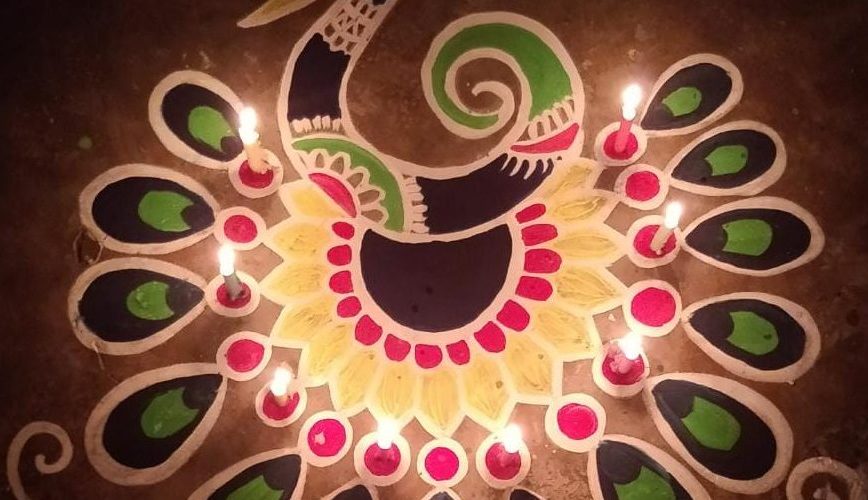
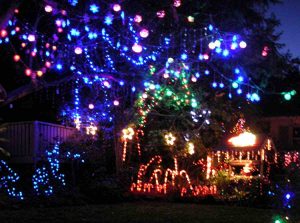
The third day glorifies Goddess Laxmi (the goddess of wealth), where every home is illuminated with diyo (oil lamps), decorated with marigolds, rangolis, and candles, and filled with music and joy. Another myth celebrates Lakshmi’s visit to earth to bless the virtuous with prosperity, explaining why households glow with oil lamps all night.
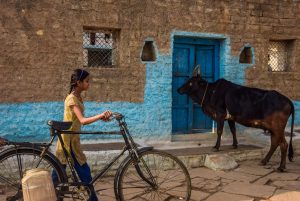
On the third day, people also worship cows as part of Gai (Cow) Tihar because they symbolise motherhood, prosperity, and divine abundance in Hindu belief. The ritual expresses gratitude toward cows for their essential role in sustaining human life and is deeply tied to both Vedic philosophy and Nepali rural livelihood.
During Gai Tihar morning rituals, cows are decorated with garlands (malla) and vermillion tika, honoured as the earthly form of Lakshmi, and offered exceptional food before households perform Lakshmi Puja in the evening.
On the fourth day, people commemorate Lord Krishna lifting Govardhan Hill to protect villagers from torrential rain, reinforcing gratitude and divine protection.
The fifth day of the festival’s origins lies in legends of Yama and his sister Yamuna, whose meeting inspired Bhai Tika—a ritual ensuring brothers’ protection from untimely death.
The festival also brings groups of youths and children who sing joyful songs, moving from house to house, symbolising sharing and community bonding. Traditional treats like Sel Roti, fruits, and sweets are prepared and exchanged.
Tihar encapsulates gratitude toward all forms of life, from animals to siblings, highlighting harmony between humans, gods, and nature.
While feeding crows and treating dogs kindly appear in scattered Hindu practices in India and South Asia, only Nepal’s Tihar systematises these rituals within a national festival calendar, reflecting the country’s deep ecological spirituality, the belief that even messengers of death and humble animals deserve honour.
The festival also marks the end of the harvest season, a time for joy, thanksgiving, and renewal. Economically and socially, it is also a period when trading, gifting, and tourism thrive across Nepal.
Nepal’s Deepawali is not just a festival of lights but a festival of life itself, celebrating love, loyalty, harmony, and hope through luminous faith, shared food, and heartfelt worship.


Add comment