

 changeadmin
Climate change is a hard reality, and the world is receiving devastating impacts – cyclones, floods, heatwaves, wildfires, hurricanes, sea level rise, etc. Due to climatic disturbances, another problem is shouting for our attention. That is global food security.
Most food crops are water intensive and heavily dependent on rain and irrigation. However, given water shortages, we must find responses to mitigate the looming effects of climate change on our food system.
What is the solution to food security?
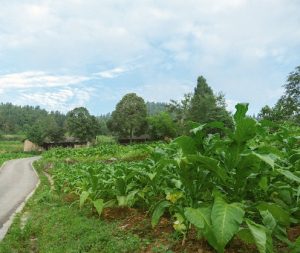
There might not be a magic bullet. Instead, we need conscious actions and several strategies to adapt to the newer environmental realities. One includes investing in and promoting food crops that are not water intensive.
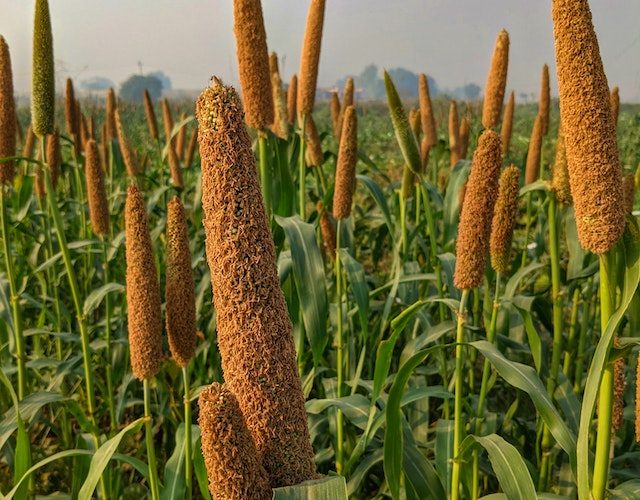
Millets are a food crop primarily grown on marginal land in dry areas of temperate, sub-tropical, and tropical regions. Research suggests that millets consume 70 percent less water than rice, grow half the time as wheat, and require 40 percent less energy in processing.
Millet is not one single crop but it is a collective group of small-seeded annual grasses that are grown as grain crops. Specific types of millet can be grown based on the region and climatic conditions.
This indicates that growing Millet should be strongly considered, especially in regions that might get affected due to erratic rainfall.
Importance of Millets in India
The importance of millets in developing and emerging economies like India, where agriculture is heavily dependent on rain-fed irrigation, is even more pronounced.
The United Nations Intergovernmental Panel on Climate Change (IPCC) states that India will face some of the most severe impacts of climate change, including intense heat waves, high and variable rainfall, flooding, and a reduction in crop yields. Therefore it is pertinent that India looks for alternative crops that are more climate resilient.
Millets are also important from a health and calorific perspective as they are a good source of protein, fiber, essential vitamins, iron, and calcium and have a low glycemic index. Considering the large section of the Indian population is still undernourished, Millet can be an affordable substitute for nutritional value.
Millet’s historical connection with ancient Indian civilization
The earliest evidence of Millets is found in the Indus civilization dating back to 3000 BC. It is an ancient grain that was domesticated for food and as part of the traditional cuisine of various cultures.
Scientific data also suggests that the importance of Millets grains increased over time, even in ancient civilizations, for climatic reasons. The excavation and carbon dating of Indian archaeological sites notes a “significant change in crop pattern (from barley-wheat-based agriculture to ‘drought-resistant’ millet-based crops).” As per this report, the crop change is likely to result from deteriorated monsoonal conditions, especially in regions of current-day Gujarat, which have become drier over time.
The current climatic scenario also hints in the same direction; many regions of India are expected to go dryer. Every year, a large part of the country experiences droughts and extreme heat waves. Therefore adapting to new crops which do not need too much water is not only a necessity but historically established.
Millets types in India
There are various types of Millets found in India; they include sorghum (Jowar), pearl millet (Bajra), finger millet (Ragi/Mandua), little millet (Kutki), Kodo millet (Kodo), barnyard millet (Sawa/Jhangora), foxtail millet (Kangni/Kakun), proso millet (Cheena).
Efforts made by India to promote Millet Grains
For the last few years, the Indian government has spearheaded a campaign to promote Millet in India and internationally.
India observed 2018 as a year of millets to encourage and promote millet production and championed the United Nations resolution to make 2023 the International Year of Millets. The U.N. General Assembly adopted a resolution in March 2021, supported by more than 70 countries.
The resolution envisages increasing public awareness of the health benefits of millets and their suitability for cultivation under tough conditions marked by climate change.
To promote Millets strongly internationally, even the country’s highest leadership is sparing no effort. During the 22nd Summit of Shanghai Cooperation Organisation (SCO) held in September 2022, Prime Minister of India, Narendra Modi said,
“The world today faces another major challenge – and that is ensuring the food security of our citizens. One possible solution to this problem is to promote the cultivation and consumption of millets. Millets are a superfood that has been grown for thousands of years, not just in SCO countries but in many parts of the world. It is a traditional, nutritious, and low-cost alternative to dealing with the food crisis.”
In addition, he added, “The year 2023 will be celebrated as the UN International Year of Millets. We should consider organizing a ‘Millet Food Festival’ under the SCO,”
In addition, under National Food Security Mission, numerous steps are being taken to increase the production of Millet in India. The steps include establishing a Center for Excellence and the Millet Mission in multiple Indian states.
In 2021, India’s public policy think tank, Niti Aayog, and United Nations World Food Program (WFP) signed a Statement of Intent to focus on building climate-resilient agriculture for enhanced food security in India. This includes an increased emphasis on mainstreaming millets.
The initiative will also explore leveraging India’s millet expertise to help other developing countries by creating knowledge management platforms and facilitating knowledge exchange.
Indian start-ups and entrepreneurs are also encouraged to develop recipes & value-added products that promote millet consumption. Millet grains, cereals, bread, and value-added products like biscuits, snacks, drinks, etc., are now readily available offline and online to cater to growing health-conscious consumers.
Wrapping Up
Despite the efforts, production of Millet in India has only marginally increased from 14.52 million tonnes in 2015-16 to 17.96 million tonnes in 2020-21. In comparison, wheat production stood at a record 109 million tonnes and paddy was 124 million tonnes in 2020-21.
Despite India being the largest producer of Millet, with about 18 percent share in the global market, the proportion of land devoted to its domestic cultivation is still tiny.
With the sustained emphasis on wheat and rice for the country’s dietary needs and farmers’ prosperity, Millet’s mindshare with consumers and farmers has dwindled over the years.
This now needs to change.
Given the climate-related challenges, it is pertinent that small Indian farmers are encouraged to shift from water-intensive crops like wheat and rice to Millet. In addition, people should be encouraged to consume millet as an alternative to rice and wheat.
In summary, if Millets have to become a solution for food security, India has to overcome various challenges from the supply side in terms of production and work towards creating demand.






Add comment