

 changeadmin
Recently, one of my friends asked for property advice; he was looking to buy an environmentally friendly apartment.
From my limited knowledge of this subject, I told him to buy the apartment from a builder or in an apartment society that focuses on energy efficiency, water conservation, waste reduction, higher use of renewable energy, and the use of sustainable materials.
After the conversation, I did additional research on this subject and learned about green buildings.
Green Buildings
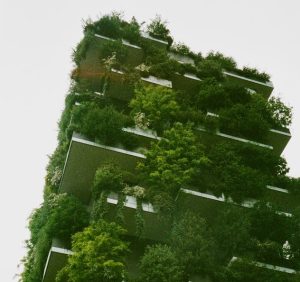
Green buildings are those that focus on eliminating negative environmental impacts in their design, construction, or operation and instead create a positive environmental impact.
Advantages of Green Buildings
Green buildings offer several benefits over conventional buildings, apart from lowering or eliminating carbon emissions, they also reduce water consumption and provide energy savings.
According to the World Green Building Council, green buildings achieve energy savings of 40-50% and water savings of 20-30% compared to conventional buildings, thereby reducing costs. If managed well, these buildings can generate their own energy, and surplus energy can be transferred to the grid for additional income.
Most importantly, a conducive setup, such as well-ventilated rooms and clean air, helps inhabitants live healthier, happier, and more productive lives.
Why do we need green buildings?
As countries push towards net-zero emissions targets, construction and real estate development have come within the ambit of sustainability.
Moreover, home buyers like my friend have become aware of environmentally friendly homes and are now demanding them from developers and building contractors.
Whether the building is to be used for residential purposes or non-residential purposes (office, school, hospital, community centre, etc), the place would need
- resources for construction and building
- energy to power its lights, appliances, air-conditioning, etc
- management of waste generated
According to a Global Alliance for Buildings and Construction report, the residential, non-residential, and building construction industry accounted for 36% of the global energy consumption and 37% of global carbon dioxide emissions in 2020.
As per the International Energy Agency (IEA) “The buildings sector accounts for 28% of total energy-related emissions including emissions from electricity use. When energy from materials used for buildings construction and renovation is included, the share of energy-related CO2 emissions from buildings jumps to just under 40%.”
Therefore, we must control building emissions not only to address climate change but also to create sustainable communities.
What needs to be done?
If a serious dent is to be made in the building sector’s emissions, significant actions are required.
Countries would need policies, technical assistance, financial incentives, and large-scale investments in the green buildings sector.
In 2019, the United Nations Secretary-General announced Zero Carbon Buildings for All—a multi-partner global initiative that includes national and local policies to make new buildings 100% zero-carbon by 2030 and existing buildings by 2050.
The initiative plans to bring policymakers, industry, and civil society together to both secure commitments to decarbonise buildings by 2030 and mobilise significant funding.
In addition, to ensure that a building meets the criteria for zero emissions, frameworks and processes need to be implemented in the respective countries.
Certifications:
Currently, Green building certifications are usually voluntary and delivered by various organisations, and they generally classify buildings into Bronze/Silver/Gold/Platinum, or 1, 2, 3, and 4 stars, based on the criteria achieved.
LEED, or Leadership in Energy and Environmental Design, is an internationally recognised green building certification system.
LEED recognises whole-building sustainable design by identifying key areas of excellence – sustainable sites, water efficiency, energy and atmosphere, materials and resources, indoor environmental quality, locations and linkages, awareness and education, innovation in design, and regional priority.
For a building to become LEED-certified, sustainability must be prioritised in design, construction, and use. Most credits are awarded for optimising energy performance. This promotes innovative thinking about alternative energy sources and encourages greater efficiency.
In India, three primary rating systems are used to assess buildings: IGBC (Indian Green Building Council), GRIHA (Green Rating for Integrated Habitat Assessment), and Leadership in Energy and Environmental Design (LEED).
India’s Bureau of Energy Efficiency (BEE) launched a Star Rating program in 2009 for office buildings to accelerate energy-efficiency activities in commercial buildings.
Given that the concept of green buildings is relatively new, standardising the rating process, including monitoring and control, would help the industry. The systems should reflect the construction and energy-performance requirements of low-carbon strategies.
Incentives and Concessions:
The development and maintenance of green buildings are not easy tasks. Sourcing energy from renewable sources like solar, along with other sustainable investments, to construct a green building increases upfront costs by a factor of many compared to a conventional building.
Higher capital costs translate to higher property prices, which discourage buyers. Hence, for green buildings to be profitable, additional incentives are needed.
The financial institutions need to chip in with lower interest rates and additional concessions for buildings that have achieved green certification. The government can also subsidise building materials and offer concessions and tax breaks to buyers of such homes and buildings.
The incentives can be tapered after a few years, as the costs of operation and maintenance will decrease over time.
Training:
Real estate needs many players and stakeholders, from architects and engineers to construction workers and utility agents.
The current ecosystem lacks the skills needed to build green infrastructure. Hence, there is an urgent need to put in place systems to provide skills training to everyone involved.
Leveraging from Startups and the MSME sector:
Real estate development requires many players, and we have seen many startups and small companies introduce innovative building products with many benefits over traditional products, especially in environmental terms.
Therefore, it is highly pertinent that infrastructure companies and builders leverage the startups working in the green building segment.
Wrapping Up
It will be interesting to see how this segment pans out, but controlling building emissions can help the environment, create sustainable communities, and ensure economic prosperity.
You might also like to read.
Here is a compilation of Indian startups working on sustainable construction.






Excellent article. Very insightful. Just wanted to add that if building materials chosen for your site are E1, Go Green certified, it will help your GRIHA and LEED certification.