

 changeadmin
There is an old saying, ‘Not all heroes wear capes’, and it fits perfectly when we speak about the volunteers of the Robin Hood Army, marching towards their mission of feeding the poor and eliminating hunger to a great extent.
The similarity between the legendary English outlaw and famous Archer, Robin Hood, and the Robin Hood Army is surely lifting the downtrodden. The only difference is that the non-profit organization is not centered around making money and works in collaboration with various restaurants to distribute food to the economically weaker sections of the society.
Today, we bring you the story of the Robin Hood Army – their background, mission, and contribution to the societal issues through our series, The ChangeBlazers.
The Robins
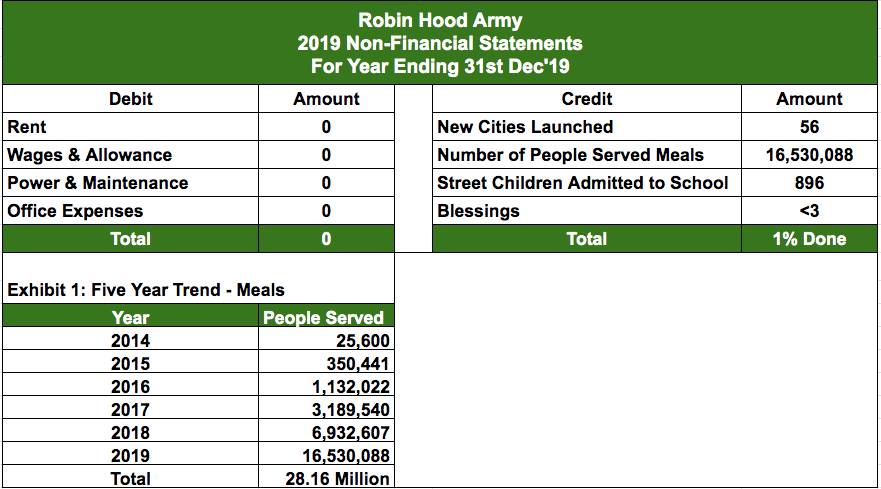
What started with a group of 8 people in 2014 has now grown to over 1000 volunteers on its rolls. Neel Ghose, the founder of RHA, was inspired by an organization named Refood in Portugal, and hence decided to bring in a similar model back home in India. Upon his return to Delhi, he called his friend Anand Sinha to establish something similar, and that’s how the journey of RHA began.
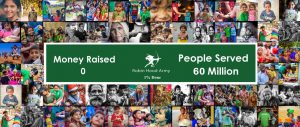
The volunteers of this zero-funds organization come from diverse walks of life and refer to themselves as ‘Robins’. They are mostly young working professionals and students that contribute to the sole purpose of funneling excess food to all those who are in dire need of it. Dressed in green jerseys, the Robins look for a venue to pick up food and ensure that it reaches out to the homeless and underprivileged.
The source of food is not just confined to restaurants, as the Robins make sure that the surplus food during weddings or any other similar functions do not go in vain and reaches the poor people.
The Hyperlocal Model
The model that the Robin Hood Army operates in is ‘hyperlocal’ in nature. The clusters formed, divided by localities, come together to form a network. The restaurants falling under each cluster contribute to collecting excess food and hand it over to the Robins. The Robins then distribute the food collected to orphanages, the homeless, HIV patients, among others. In turn, the organization ‘earns smiles’. 😊
The Role of Social Media in Enhancing the Reach of the Robin Hood Army
Social media has been crucial in connecting and solidifying a formidable network that seems to be growing and breaking all the geographical barriers with each passing day.
During the year 2016, the first city that was considered beyond the borders of India was Karachi, Pakistan. The collaboration of the Robin Hood Army with a few startups, corporates, and media houses through social media helped generate food and feed nearly half a million poor people from Karachi.
The true reason behind the successful attempt in feeding such a vast number of people on the first international outreach is the decentralization of the responsibilities and efforts among the different participants.
Every volunteer took complete ownership of their duties and worked tirelessly to ensure stable coordination among the Robin Hood Army and all other participants through various social media platforms like Twitter and Facebook. Additionally, the absence of monetary exchange also helped by not hindering the process of alleviating hunger and ensured that the project was conducted transparently.
Few Recent Contributions of the Robin Hood Army to Serve the Needy
According to the recent report of the Global Hunger Index, India ranks 102nd on the list. Hence, this report sheds light on the problem of famine faced by the citizens of the country. And, the situation gets worse at the time of a natural calamity like earthquake, cyclone, etc., where non-profit organizations like the Robin Hood Army come to rescue of the Government.
During May 2020, the state of West Bengal was severely hit by a cyclone called Amphan, that killed more than 70 people and affected more than hundreds. The Robin Hood Army distributed dry rations to 800 families in West Bengal, including 500 families from Kolkata and 300 families from Jhargam.
https://www.google.com/url?q=https://www.instagram.com/p/CD6SfpEJCgz/?igshid%3D147ltldm3uig&sa=D&source=hangouts&ust=1597915981877000&usg=AFQjCNEAxcKqXjERrY_UqEEzXZsWeNYFTg
Few other contributions include collaboration with startups like Zomato, ScoopWhoop, and Uber to serve food to one lakh people on Independence Day, 2015, and the project was called #Mission100K. During April 2016, the zero-funds organization also donated 75,000 liters of drinking water to drought-hit farmers of Maharashtra.
During the Existential COVID-19 crisis
Since the massive outbreak of the pandemic COVID-19, there has been a significant rise in the rate of hunger problems globally. Subsequently, citing this existential crisis, the Robin Hood Army had come up with a great initiative to flatten the curve of the rising hunger problems. The initiative, named as #Mission30M, aimed at serving 30 million meals to the deprived sections of the society from 1st July to 15th August 2020 across ten countries. The list of those countries includes India, Uganda, Bahrain, Sri Lanka, Botswana, Philippines, Malaysia, Pakistan, Nigeria, and Nepal.
https://www.google.com/url?q=https://www.instagram.com/tv/CBGU8ofAqZm/?igshid%3D4lsnlu6husae&sa=D&source=hangouts&ust=1597914465546000&usg=AFQjCNFGlUenuQV2c3YP6xki-T4-2AsAxQ
Since the kick-off of the #Mission30M, more than 50,000 Robins signed-up to make this a successful project. Besides, a few outreach initiatives were also taken with extensive media platforms like billboards and podcasts, etc., to make all the local citizens aware of this movement so that all the interested individuals could also participate in mobilizing the efforts.
In the preceding ten days of Independence Day, the entire team of RHA consistently put efforts to achieve the desired goal. The organization released the final count for the mission a few days ago, revealing how every single Robin across eight of these countries served 23 million meals across 160 cities.
https://www.google.com/url?q=https://www.instagram.com/p/CD_vJ4yJT11/?igshid%3D1jjpkis9q0mj9&sa=D&source=hangouts&ust=1597914980387000&usg=AFQjCNFSOzrniExtbLrIlpi2GUfjGU3A_A
Final Thoughts
We hope that story behind The Robin Hood Army inspires you to feed the deprived ones. The organization is one of those who are trying to bring about a progressive and positive change to our society by beating global hunger and making food available to everyone who needs it.






Add comment